Winter Work Outfits: A Complete Guide to Professional Cold-Weather Style
Dressing for the office during winter presents a unique challenge — balancing warmth and comfort with professionalism and polish. Winter work outfits need to keep you cozy through freezing commutes while still looking sharp for meetings, presentations, and everyday office life. This guide covers everything you need to know about building a winter work wardrobe that’s both practical and stylish.
Whether you work in a formal corporate environment, a business-casual office, or a creative workplace with more relaxed dress codes, this article offers outfit ideas, essential pieces, and styling tips to help you navigate the coldest months with confidence.
Why Winter Work Outfits Require Special Planning
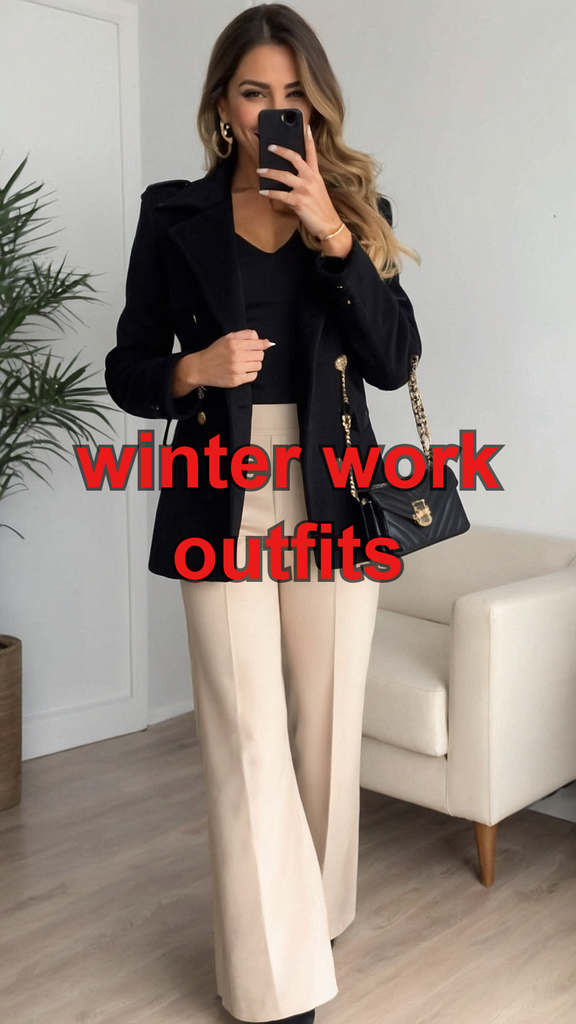
Winter work outfits demand more thoughtful planning than other seasons because you’re managing multiple variables at once: staying warm during your commute, remaining comfortable in a climate-controlled office, and maintaining a polished appearance throughout the day. Layering becomes essential, as does choosing fabrics that transition well between outdoor cold and indoor warmth.
Additionally, many workplaces have specific dress code expectations, so winter work outfits must strike a balance between seasonal practicality and professional appropriateness.
Essential Wardrobe Pieces for Winter Work Outfits
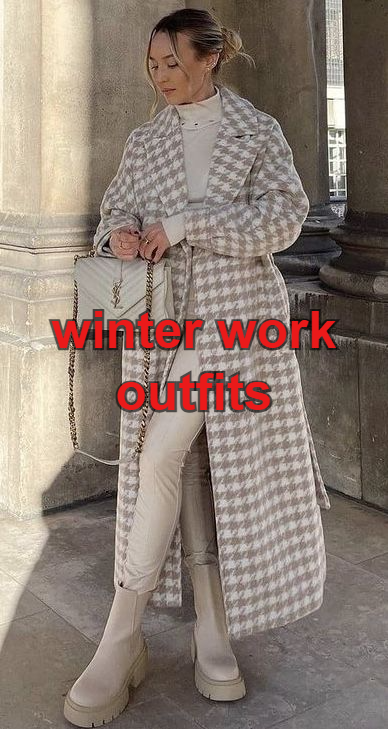
Building a solid foundation for winter work outfits starts with a few key investment pieces:
- A tailored wool coat in a versatile neutral color
- Cashmere or wool sweaters in solid, professional tones
- Tailored trousers and pencil skirts
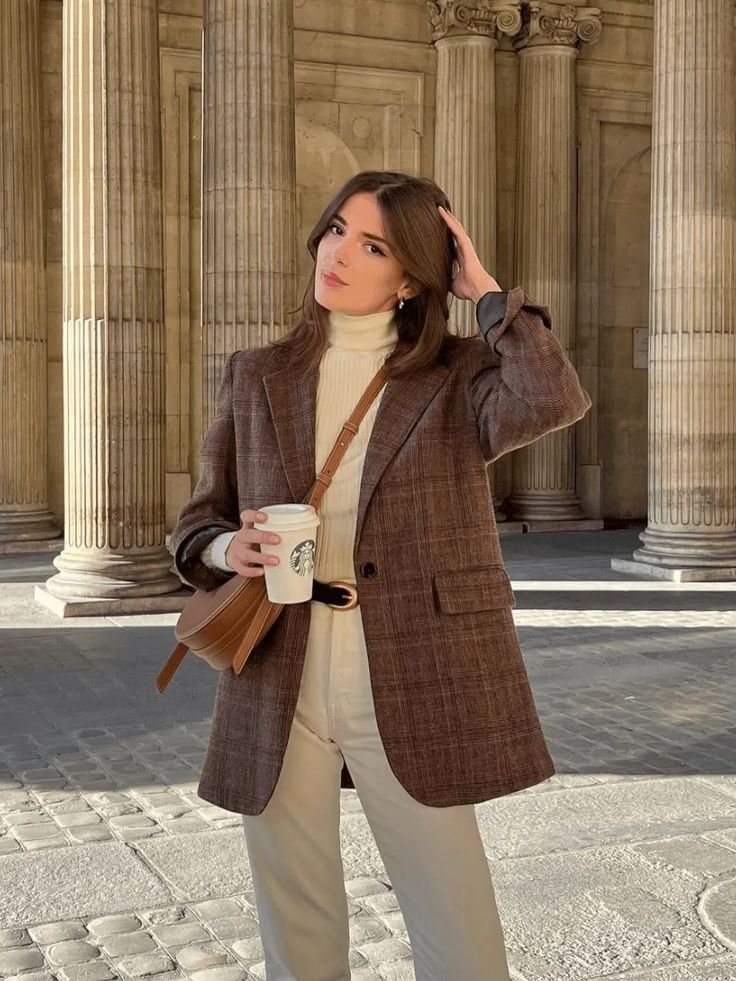
- Blazers in classic colors like navy, black, and grey
- Collared shirts and blouses for layering
- Knee-high boots appropriate for office settings
- A structured tote or briefcase
These pieces allow for countless combinations while maintaining the polished, professional appearance necessary for most workplace environments.
Layering Strategies for Winter Work Outfits
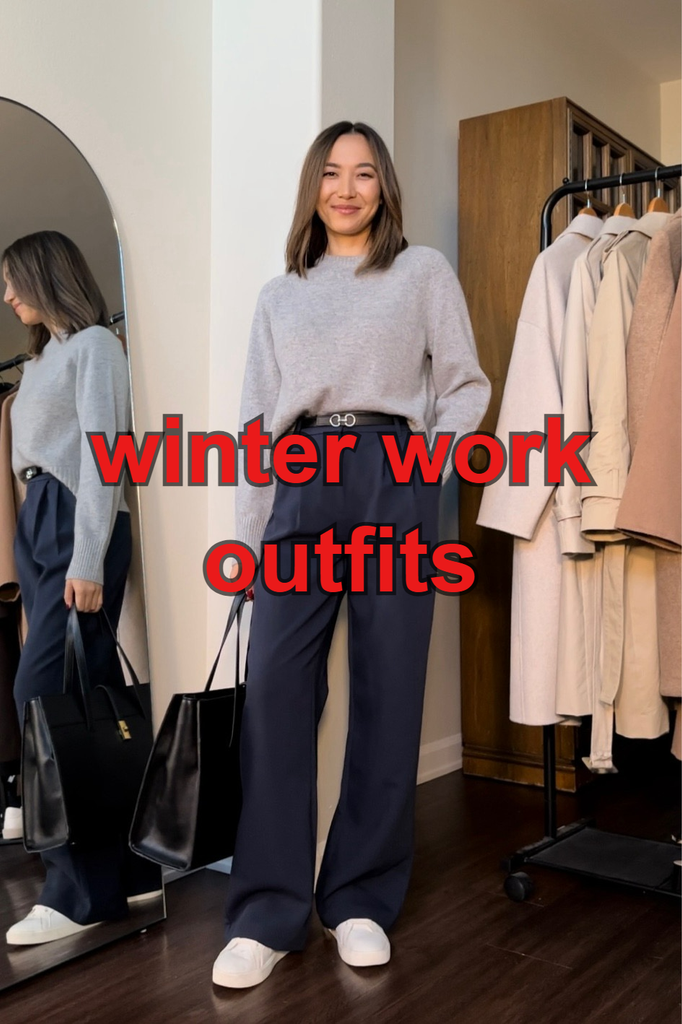
Effective layering is the cornerstone of successful winter work outfits. Consider this three-layer approach:
Base layer: A fitted turtleneck, camisole, or collared shirt worn closest to the skin.
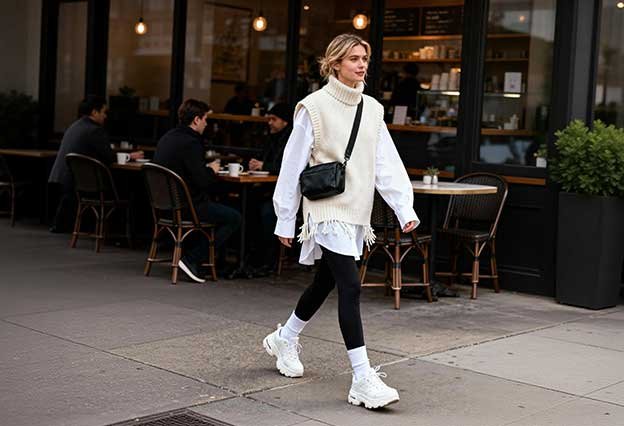
Middle layer: A sweater, cardigan, or vest that adds insulation without excessive bulk.
Outer layer: A tailored coat or blazer that can be removed once you’re settled at your desk.
This layering system allows you to adjust your warmth level throughout the day, removing or adding pieces as needed between your commute and office environment.
Winter Work Outfits for Formal Corporate Settings
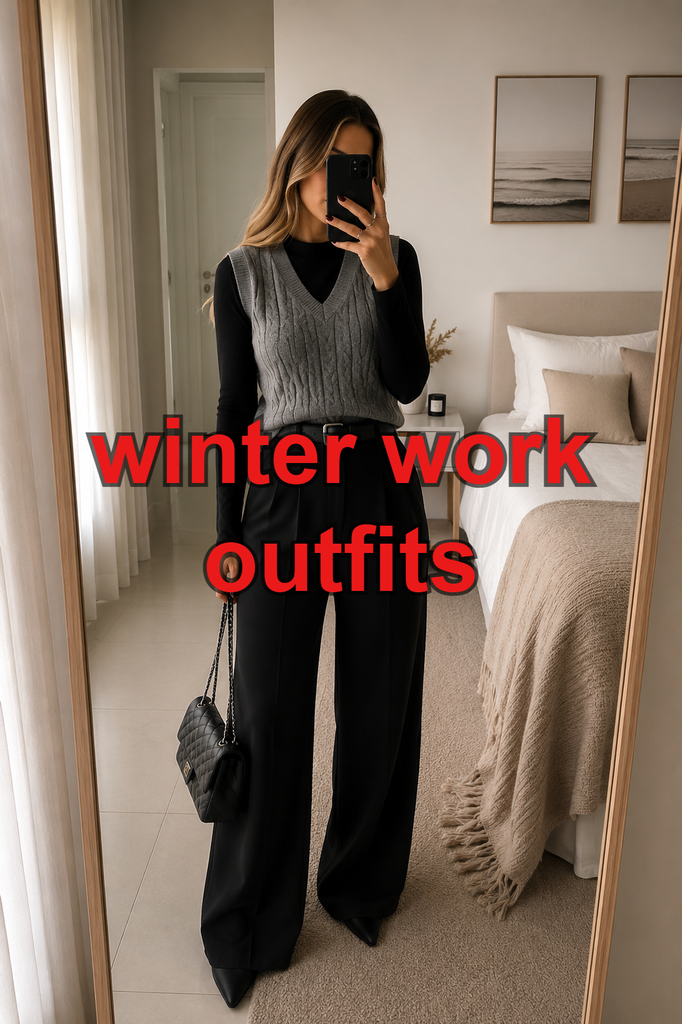
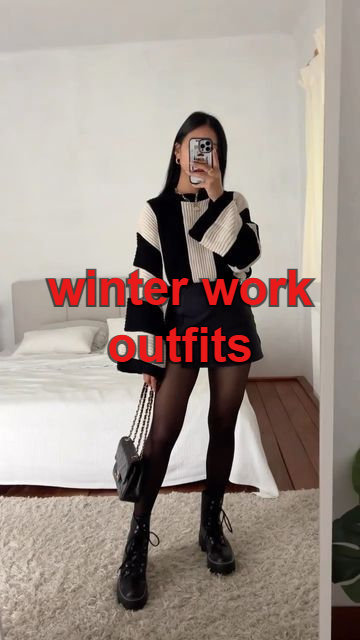
For traditional corporate environments, winter work outfits should lean toward polished, conservative styling:
- A tailored blazer paired with matching trousers and a collared shirt
- A structured pencil skirt with a cashmere sweater and knee-high boots
- A wool sheath dress layered with a blazer for added warmth
- Monochrome outfits in navy, black, or charcoal for a streamlined, professional look
Adding a quality wool coat as your outerwear choice completes the polished aesthetic expected in more formal corporate settings.
Winter Work Outfits for Business Casual Offices
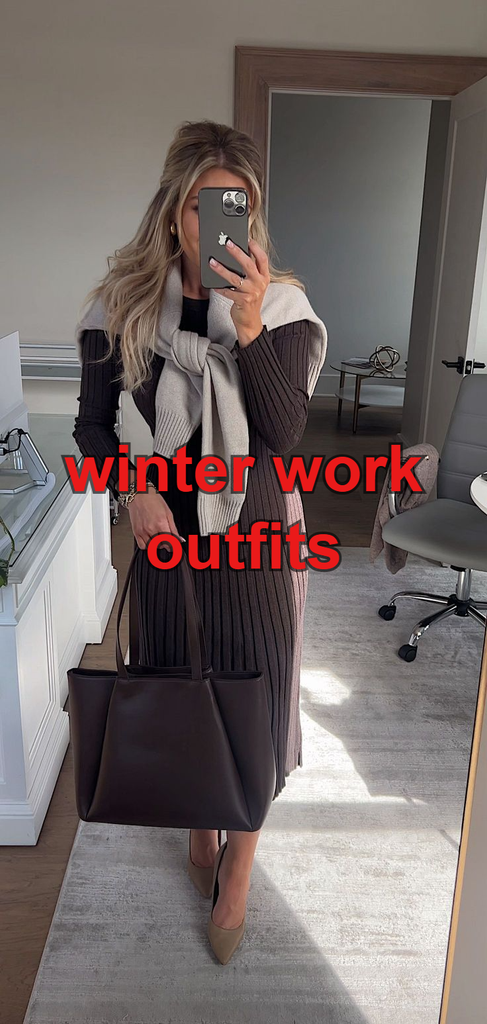
Business casual environments offer slightly more flexibility while still requiring a professional appearance:
- A cardigan layered over a collared shirt with tailored trousers
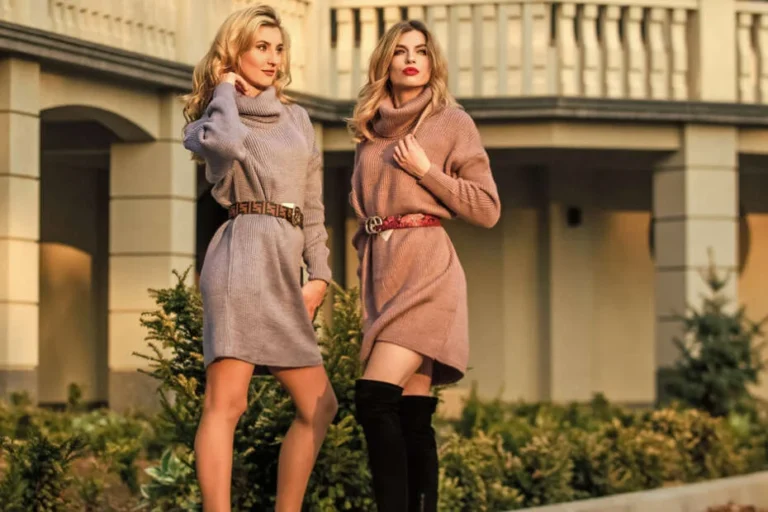
- A sweater dress paired with tights and ankle boots
- Dark denim paired with a blazer and a simple knit top
- A turtleneck sweater with a midi skirt and loafers
These combinations allow for a bit more personal style while still maintaining the polish expected in a professional setting.
Winter Work Outfits for Creative Workplaces
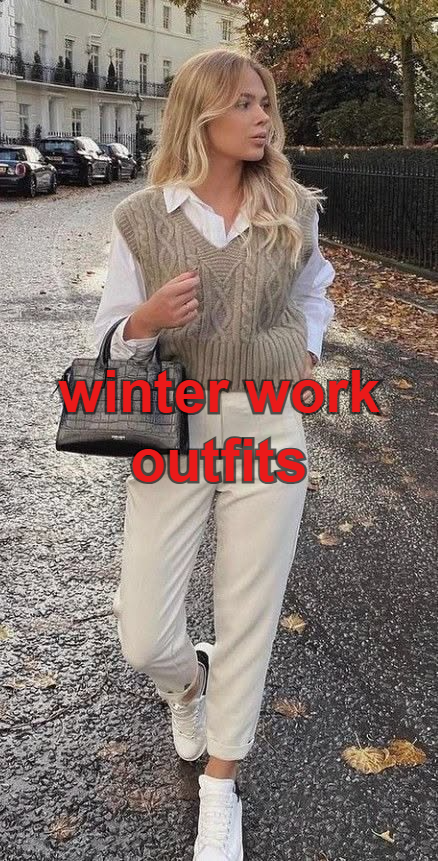
Creative industries often allow for more expressive winter work outfits, incorporating trendier pieces and bolder choices:
- A statement sweater paired with tailored trousers and ankle boots
- A leather skirt with a chunky knit sweater for textural contrast
- Wide-leg trousers paired with a fitted turtleneck and a bold blazer
- Layered jewelry and unique accessories to add personality to a simple base outfit
These environments provide an opportunity to experiment with color, texture, and silhouette while still maintaining an overall professional appearance.
Dresses for Winter Work Outfits
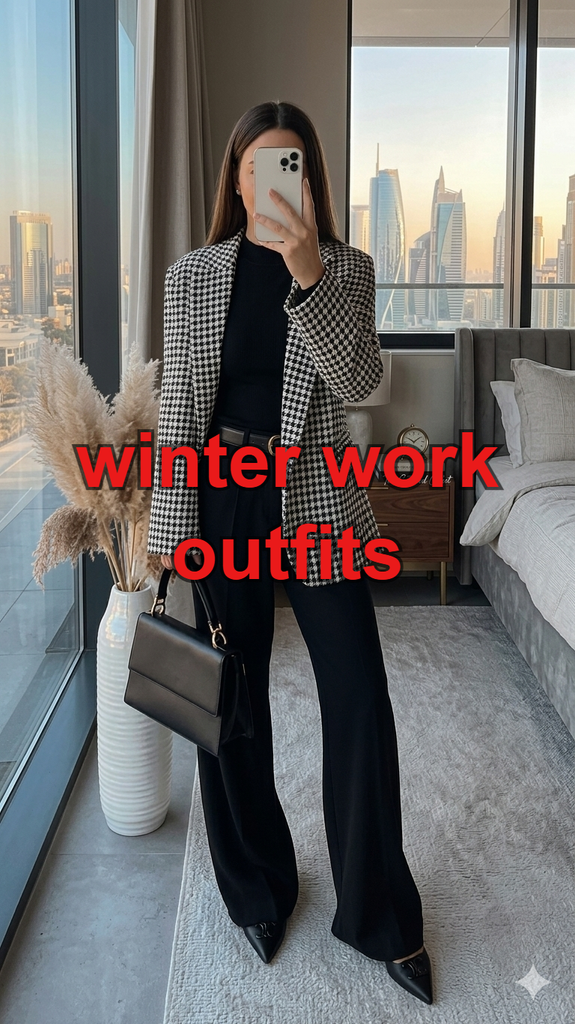
Dresses can be a versatile, easy option for winter work outfits when styled with the right layers:
- A wool sheath dress paired with tights and a blazer
- A sweater dress with knee-high boots and a structured coat
- A shirt dress layered with a cardigan for added warmth
- A wrap dress paired with tights and ankle boots for a flattering silhouette
Adding tights and a substantial coat ensures dresses remain practical even during the coldest office commutes.
Pants and Trousers for Winter Work Outfits
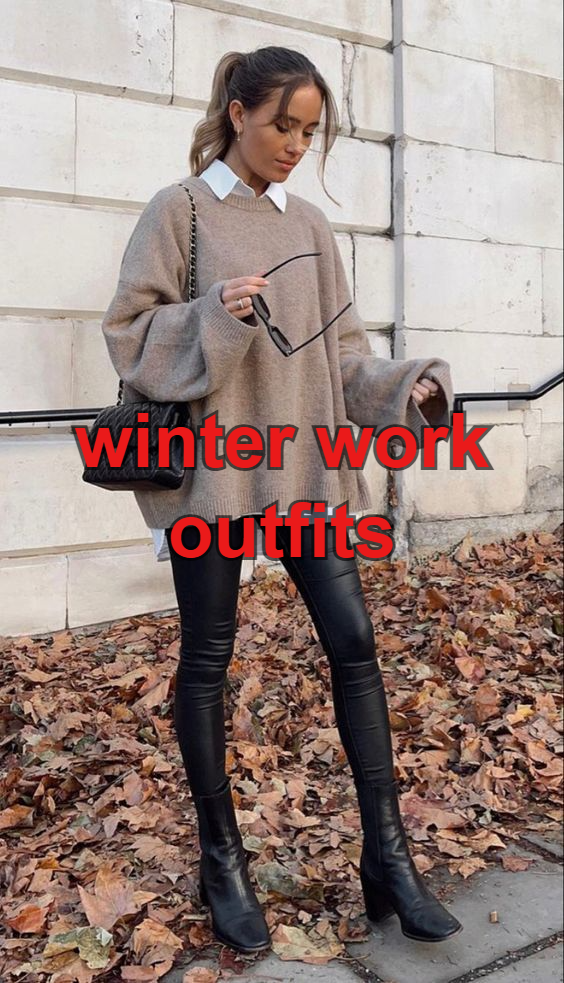
Well-tailored trousers are a staple of winter work outfits, offering both warmth and professionalism:
- Wool trousers for maximum warmth and a polished finish
- Tailored corduroy pants for added texture during colder months
- Straight-leg trousers paired with a tucked-in sweater
- Wide-leg trousers for a more relaxed yet professional silhouette
Choosing trousers in thicker fabrics like wool or corduroy helps maintain warmth without sacrificing the tailored appearance necessary for office settings.
Skirts for Winter Work Outfits
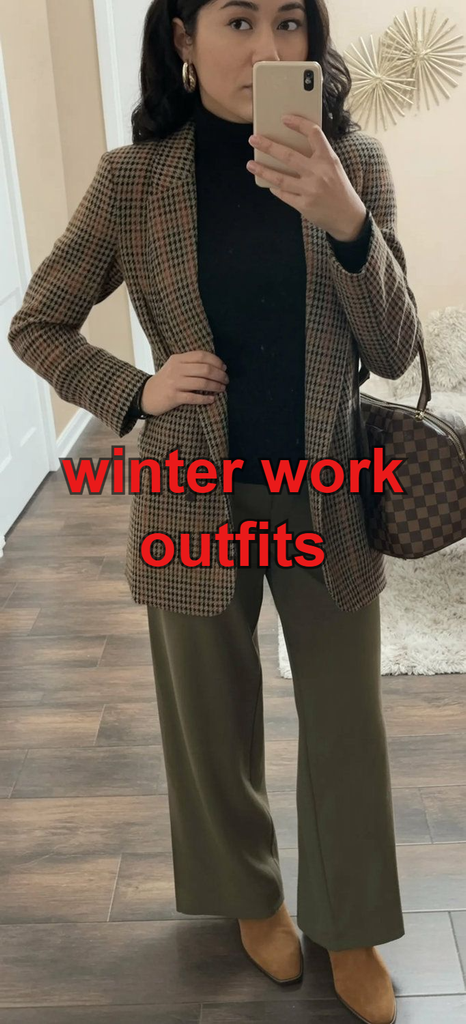
Skirts remain a classic choice for winter work outfits, particularly when paired with the right layering pieces:
- Pencil skirts with tights and a fitted sweater
- A-line skirts paired with knee-high boots for added coverage
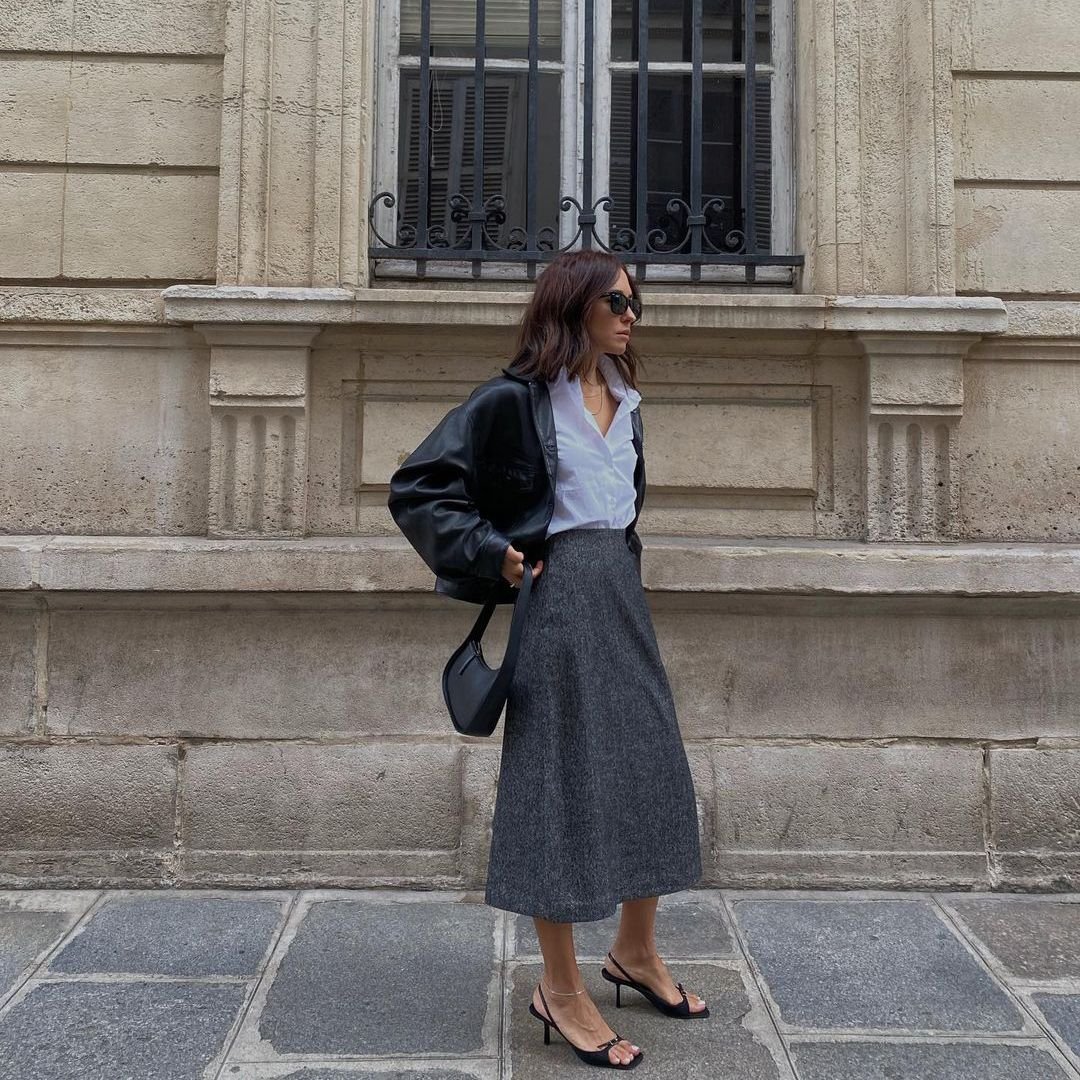
- Midi skirts layered with a turtleneck and blazer
- Tweed skirts for a textured, professional aesthetic
Pairing skirts with opaque tights and substantial footwear ensures they remain practical for winter office wear.
Sweaters and Knitwear for Winter Work Outfits
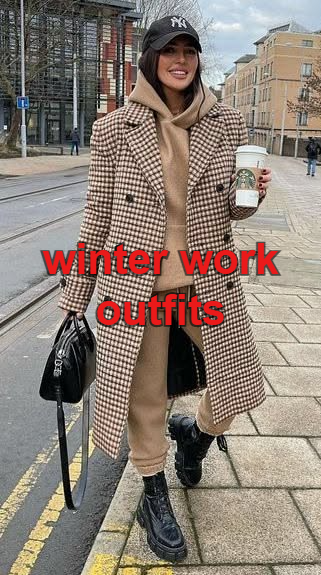
Sweaters are essential for both warmth and style in winter work outfits. Consider these options:
- Cashmere crewneck sweaters for a polished, professional look
- Turtleneck sweaters for added warmth and a sleek silhouette
- Fine-knit cardigans layered over collared shirts
- Structured sweater vests for a preppy, professional aesthetic
Choosing finer-gauge knits rather than overly chunky styles helps maintain a more tailored, office-appropriate appearance.
Outerwear Choices for Winter Work Outfits
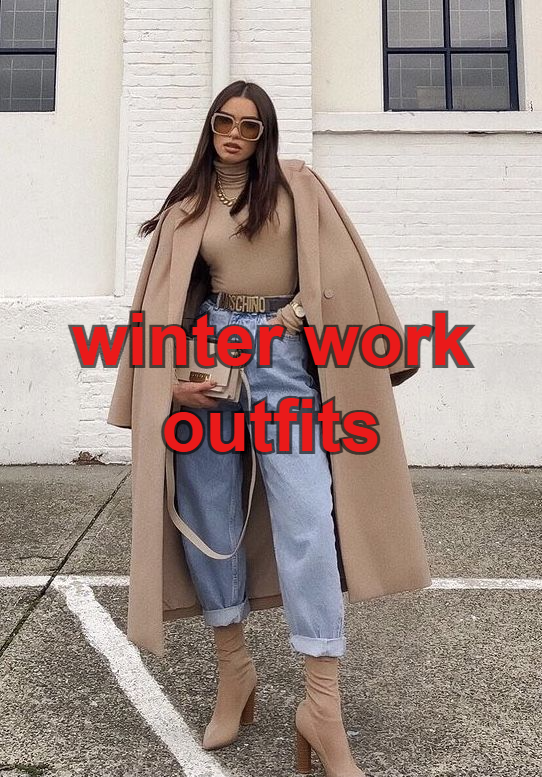
Your coat is often the first impression you make each day, making it an important consideration for winter work outfits:
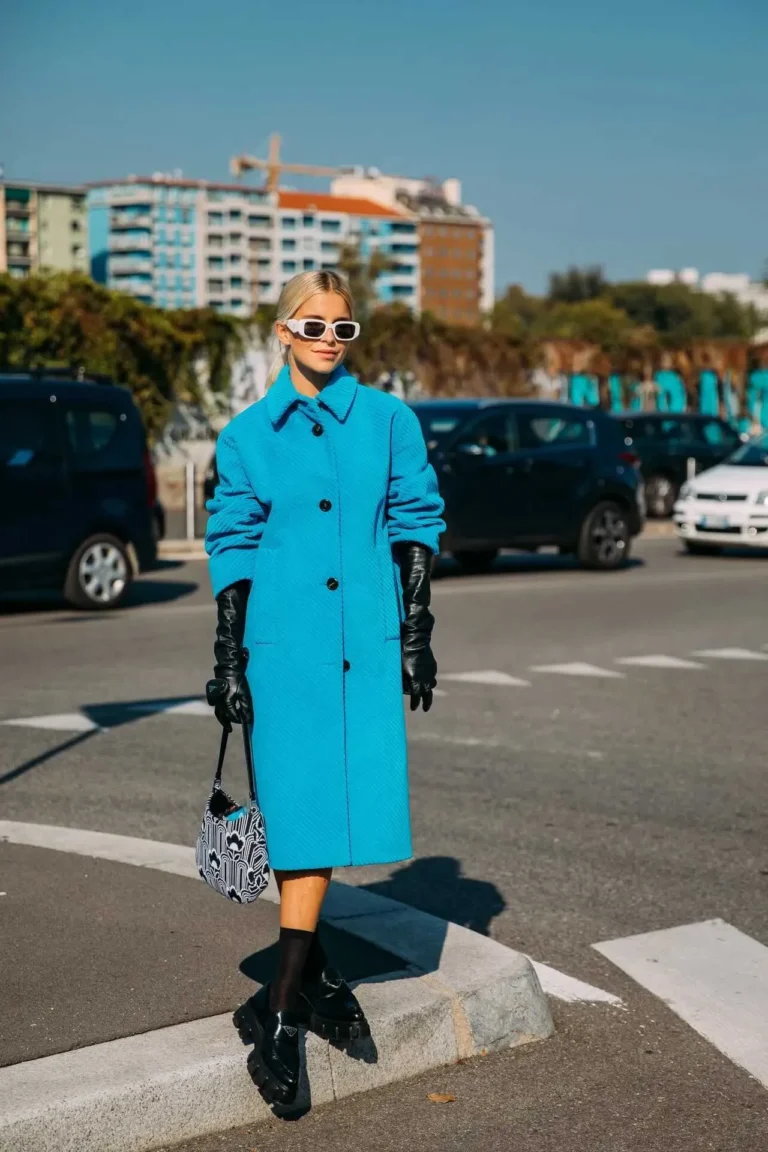
- A tailored wool coat for a classic, professional finish
- A structured trench coat for milder winter days
- A long puffer coat for particularly cold climates, paired with polished pieces underneath
- A wool cape or poncho for a slightly more fashion-forward professional look
Investing in one or two high-quality coats ensures you always have appropriate outerwear for your winter work outfits, regardless of the weather.
Footwear for Winter Work Outfits
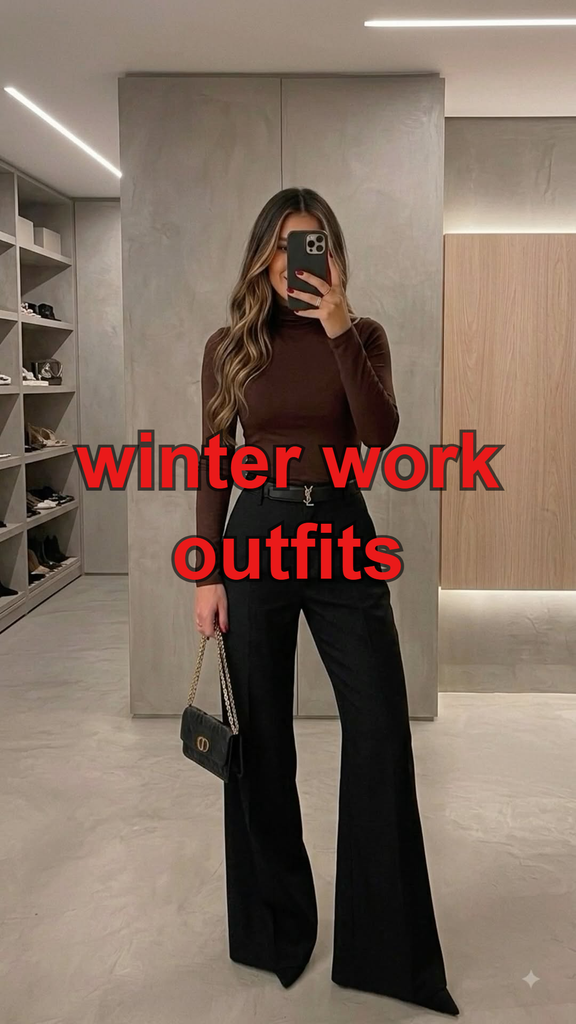
Choosing appropriate footwear is essential for both comfort and professionalism during winter. Consider these options:
- Knee-high boots: A versatile, polished choice for both skirts and trousers
- Ankle boots: Ideal for pairing with trousers or dresses
- Loafers: A classic, comfortable option for business casual settings
- Low heeled pumps: Appropriate for more formal corporate environments
Keeping a pair of weatherproof boots for commuting, along with office-appropriate shoes to change into, is a practical strategy for many professionals during winter months.
Accessories for Winter Work Outfits
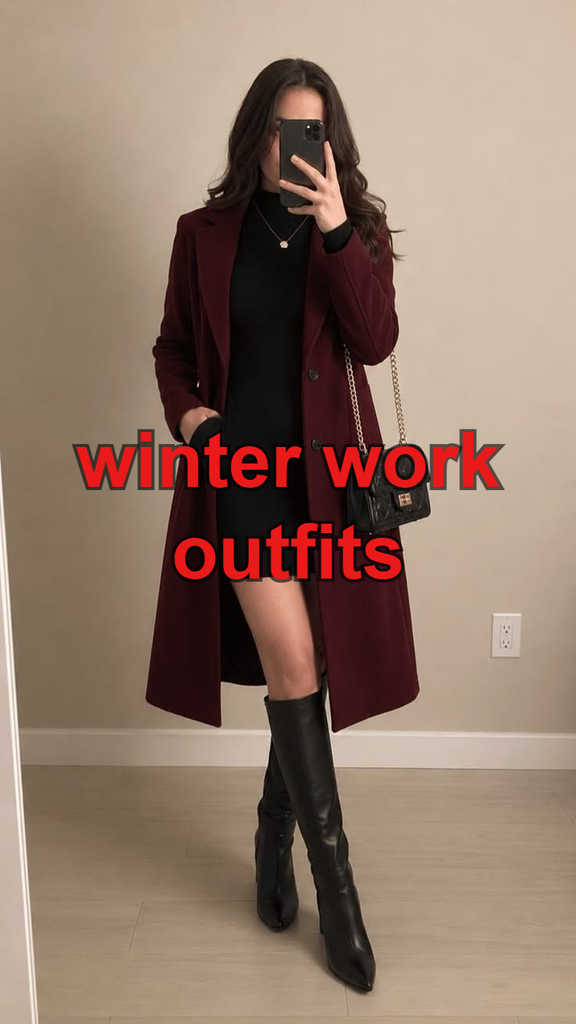
Thoughtful accessories can add polish to any winter work outfit. Consider these options:
- A structured leather tote or briefcase for a professional finish
- Delicate jewelry that doesn’t distract during meetings or presentations
- A silk scarf for both warmth and sophistication
- Leather gloves for a polished commute
Keeping accessories relatively understated ensures they enhance rather than distract from your overall professional appearance.
Color Palettes for Winter Work Outfits
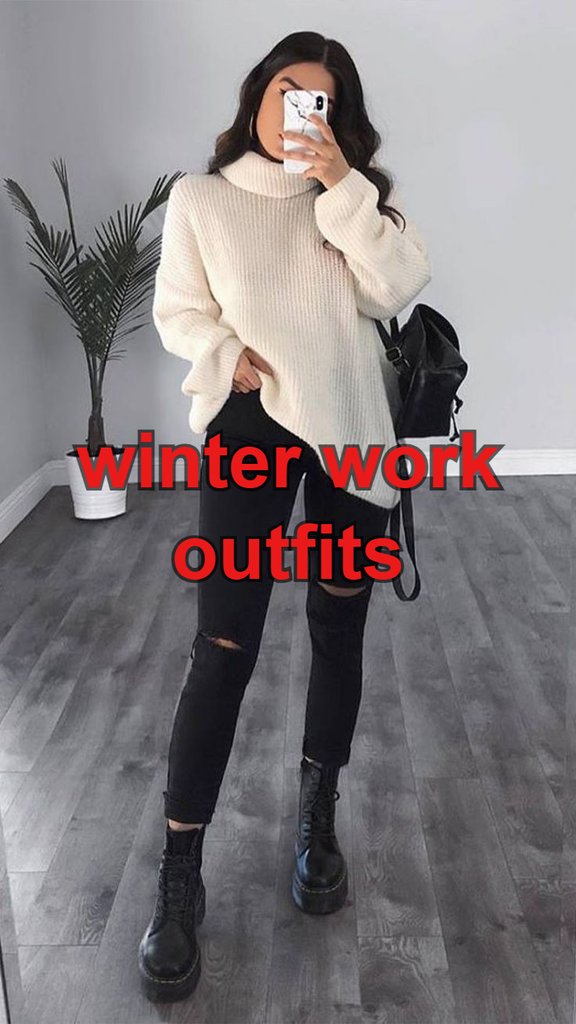
Choosing the right colors can help streamline your winter work wardrobe while maintaining a professional appearance:
- Classic neutrals: Navy, black, grey, and camel for versatile, timeless combinations
- Deep jewel tones: Burgundy and forest green for a slightly more elevated look
- Monochrome: Building outfits within a single color family for a sleek, cohesive appearance
- Subtle patterns: Houndstooth or pinstripe for added visual interest without appearing unprofessional
Sticking to a cohesive color palette makes it easier to mix and match pieces, creating multiple winter work outfits from a smaller wardrobe.
Winter Work Outfits for Remote and Hybrid Employees
For those working remotely or in hybrid arrangements, winter work outfits require a slightly different approach:
- Comfortable yet polished tops for video calls, paired with cozy bottoms
- Cardigans or blazers worn over casual basics for a professional appearance on camera
- Structured tops paired with leggings or joggers for at-home comfort
- Simple, camera-friendly colors that read well on video calls
Balancing comfort with professional appearance is particularly important for remote workers who need to look put-together during virtual meetings while remaining comfortable throughout the day.
Common Mistakes to Avoid with Winter Work Outfits
Even with the right pieces, certain styling choices can undermine the professionalism of a winter work outfit. Avoid these common mistakes:
- Wearing overly casual pieces like athletic wear or overly distressed denim
- Choosing bulky layers that look unprofessional or restrict movement
- Neglecting to remove outerwear once settled at your desk, which can appear unprepared
- Ignoring your workplace’s specific dress code expectations
- Over-accessorizing to the point of distraction during meetings
Being mindful of these details helps ensure your winter work outfits remain both practical and appropriately professional.
Frequently Asked Questions About Winter Work Outfits
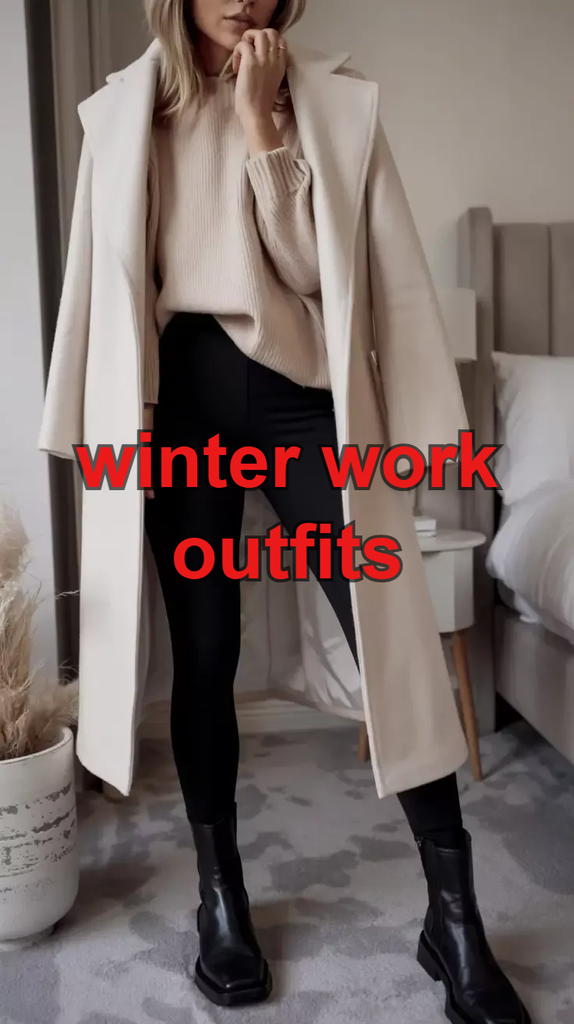
How can I stay warm during my commute without overheating at the office? Layering is key — wear removable pieces like coats, scarves, and cardigans that can be taken off once you’re settled indoors.
What are the most versatile pieces for a winter work wardrobe? A tailored wool coat, cashmere sweaters, and well-fitted trousers or skirts form the foundation of most versatile winter work outfits.
Are boots appropriate for the office in winter? Yes, knee-high boots and ankle boots are widely considered appropriate and practical choices for most professional winter work outfits.
How do I dress professionally while working from home in winter? Focus on polished tops paired with comfortable bottoms, ensuring you look put-together for video calls while remaining cozy throughout the day.
Final Thoughts on Winter Work Outfits
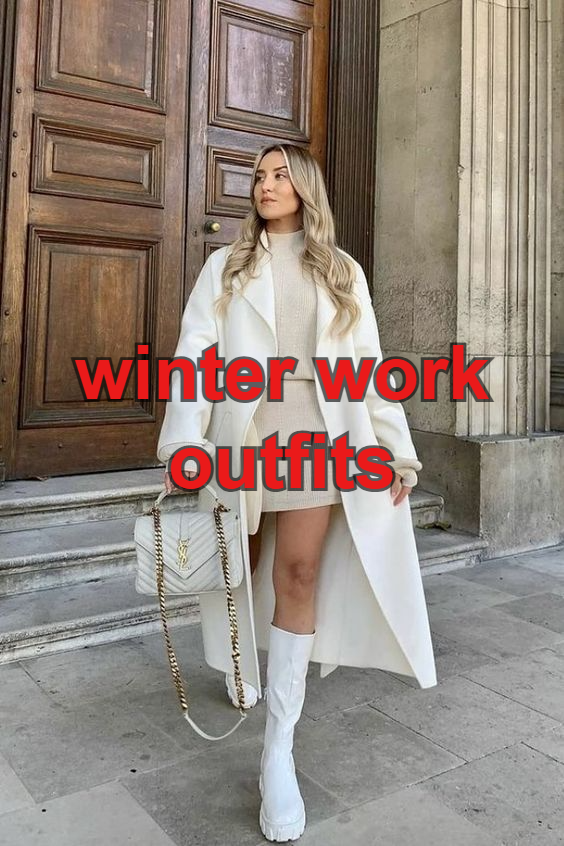
Winter work outfits require a thoughtful balance of warmth, comfort, and professionalism. By investing in quality foundational pieces, mastering strategic layering, and choosing a cohesive color palette, you can build a winter work wardrobe that keeps you comfortable through freezing commutes while maintaining a polished appearance throughout the workday. Whether you’re navigating a formal corporate environment or a more relaxed creative workplace, the principles of thoughtful layering and quality basics remain the foundation of successful winter work dressing.