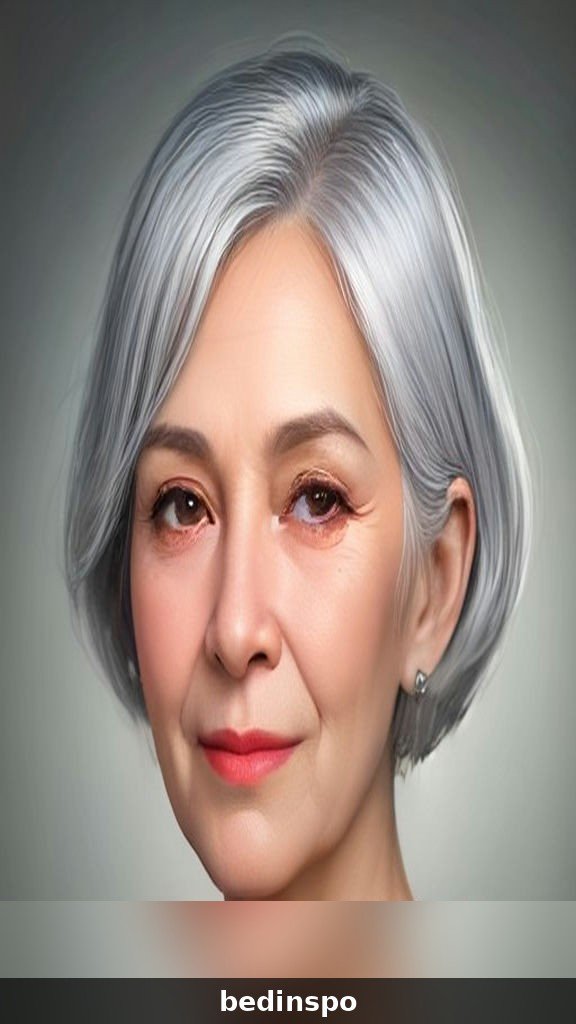
Hairstyles for Women Over 60: 16 Elegant Looks for Every Hair Type
Hairstyles for Women Over 60: 16 Elegant Looks for Every Hair Type
Somewhere along the way, the world decided that women over 60 should all wear the same short, sensible haircut. The women in this guide never got that memo — or rather, they got it and ignored it completely. Their hair is silver, styled, textured, sometimes long, often bold, and always unmistakably theirs.
Here’s the real truth about hairstyles for women over 60: there is no age-appropriate haircut. There are only flattering and unflattering ones, and the rules are the same they’ve always been — match the cut to your hair type, your face, and your life. Hair at 60 has usually changed: it’s often finer, drier, and some shade of grey or silver. Those aren’t problems. They’re just new parameters, and every style below works beautifully within them.
You’ll find sixteen looks here: elegant bobs, playful pixies, feathered classics updated for today, styles designed to shine with glasses, honest solutions for thinning hair, and permission — if you ever needed it — to wear your hair long and silver and glorious. Let’s find yours.
Choosing a Hairstyle That Loves You Back at 60
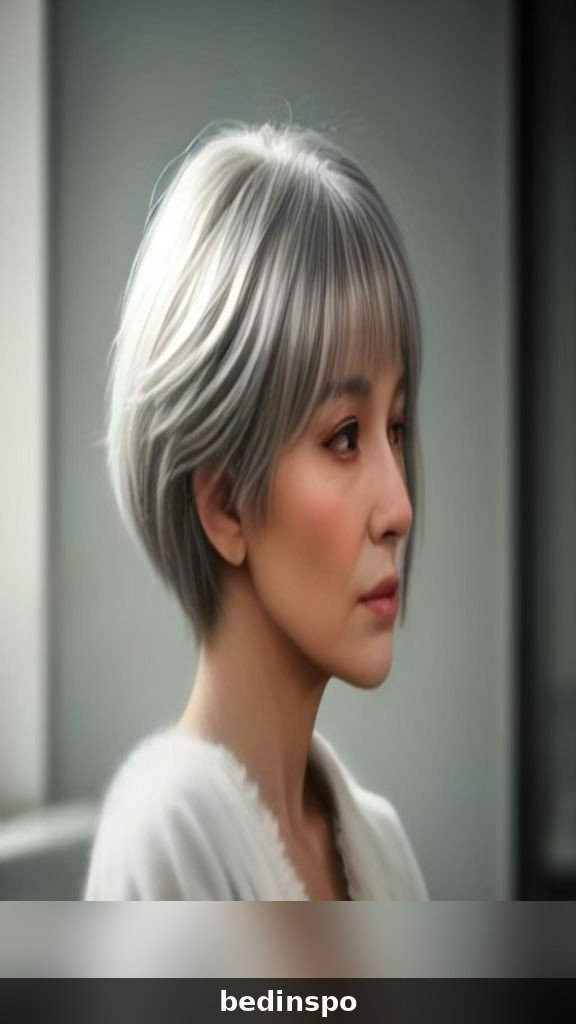
Before the specific cuts, three principles that matter more than any trend. Softness around the face: feathered edges, side-swept fringes, and gentle layers soften features far more kindly than blunt lines or severe pull-backs. Lift at the crown: a little height on top balances the face and makes hair look fuller — flat hair is the one thing that genuinely ages a style. Shine and condition: grey hair’s wiry texture scatters light, so it can look dull even when it’s healthy; glosses and moisture are what turn silver into a jewel tone.
Also consider your actual life. Glasses, hearing aids, an active schedule, arthritic hands that make blow-drying painful — a good stylist wants to know these things, because the best hairstyle is the one you can maintain happily on an ordinary Tuesday. Bring photos of women whose hair you admire, ideally with your hair type and coloring. Then let the cuts below be your starting menu.
The Soft Layered Bob: The Universal Favorite
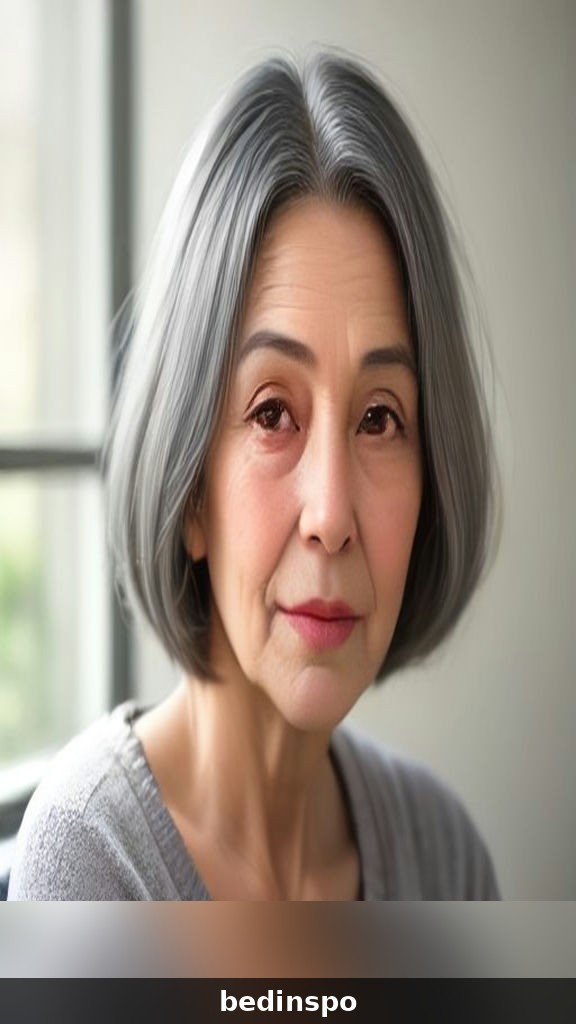
If one hairstyle deserves the crown for women over 60, it’s the soft layered bob — chin to shoulder length, with gentle layers that create movement and feathered ends that never look blunt or heavy. It frames the face like a portrait frame: drawing the eye to your features, softening the jawline, and giving fine hair the appearance of body.
The layered bob adapts endlessly. Wear it smooth and tucked for elegance, tousled with texture spray for a modern edge, or with a deep side part for old-Hollywood glamour at dinner. It suits straight, wavy, and lightly curly hair, and because the layers are soft rather than choppy, it grows out gracefully between 8-week trims.
Ask for layers that start below the cheekbones — layers cut too high can puff around the ears. And keep the ends textured, not thinned: fullness at the bottom is what makes this bob look expensive.
The Classic Pixie for Silver Hair
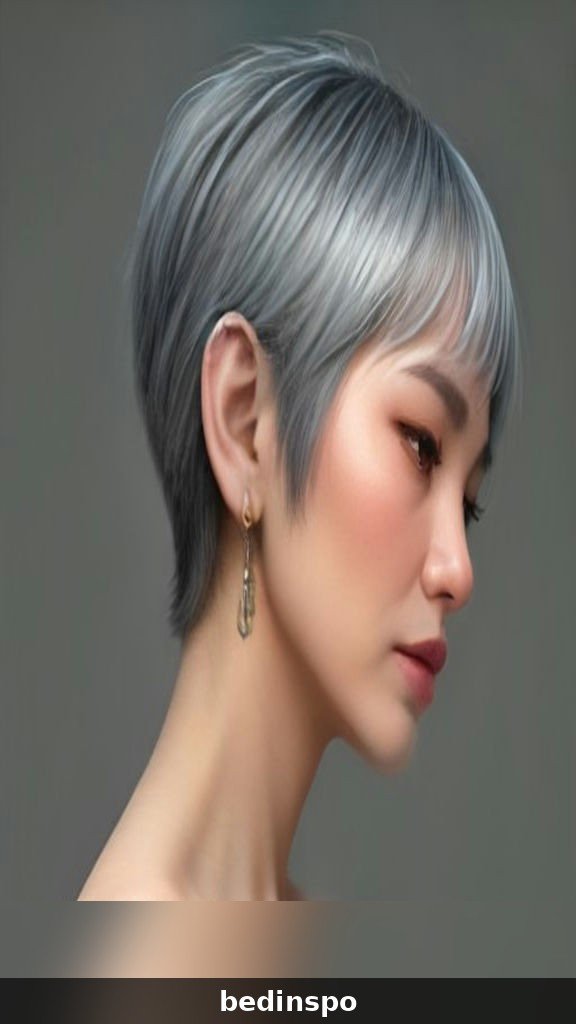
The silver pixie is an icon for a reason. Cropped close with a longer, sweeping top and a soft fringe, it showcases silver hair’s natural dimension — all those shades of white, grey, and charcoal that no colorist could bottle — while lifting the entire face.
Silver hair is typically coarser than pigmented hair, which gives a pixie wonderful natural texture and stand-up volume at the crown. Style it smooth and side-swept for polish, or piecey and tousled for playfulness with a dab of matte paste. The pixie also makes the grey transition dramatically easier: going short while you grow out color can cut the awkward two-tone phase to a few months.
Maintenance is the trade: trims every 4–6 weeks keep the shape crisp, and a purple shampoo once a week keeps silver icy-bright. In exchange you get a five-minute morning routine and a look that turns heads in the best way.
Shoulder-Length Hairstyles with Movement
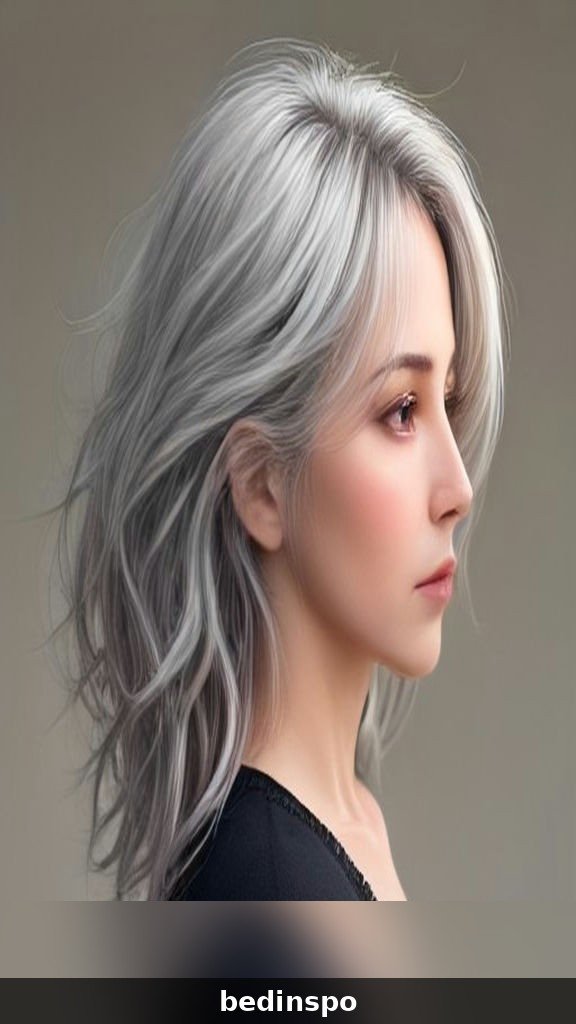
Not every woman over 60 wants to go short — and shoulder length, done right, is deeply flattering. The keys are layers for movement and an absolute end to the flat, one-length curtain of hair that drags the face down. Long layers through the bottom third, face-framing pieces starting at the cheekbones, and ends that flip or wave: that’s the formula.
Shoulder-length hair offers styling range short hair can’t: smooth one day, soft waves the next, clipped up for occasions. It also keeps some warmth around the neck and shoulders, which many women prefer. The non-negotiables are regular trims (split ends show mercilessly on mature hair) and enough layering that the hair swings rather than hangs.
Style with a large round brush or big soft rollers for the classic bouncy finish. If your hair is fine, keep the length at the collarbone maximum — beyond that, gravity wins.
Short Curly Hairstyles: Let the Curls Be the Crown
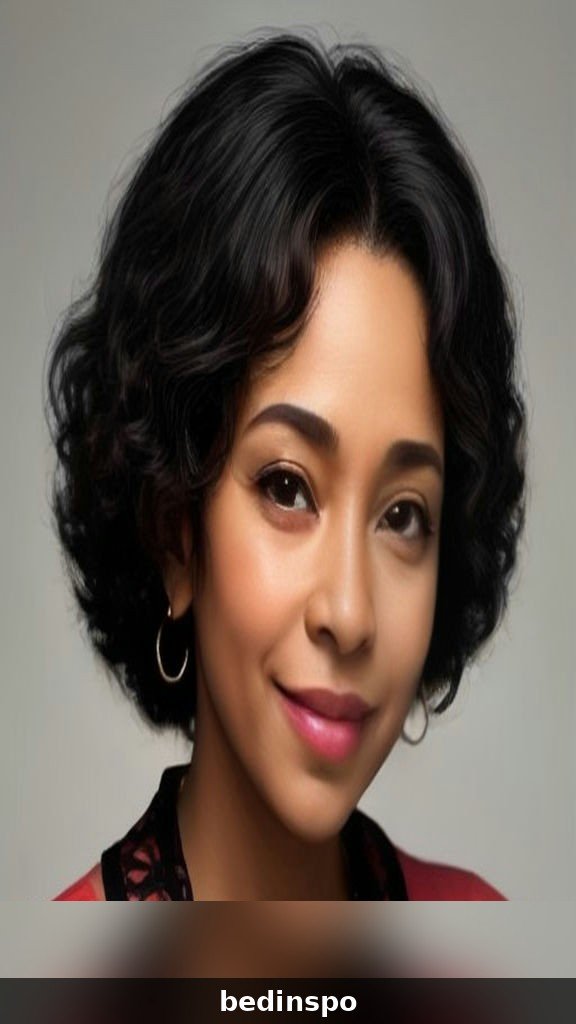
Natural curls are a gift at any age, and after 60 they deliver what many women are trying to manufacture: volume, texture, and presence. A short curly cut — shaped generously around the head with layers that let each curl sit in its own space — creates a soft, full silhouette that is both elegant and joyful.
Curly grey hair needs two things: a curl-by-curl dry cut from a stylist who knows curls (wet-stretched cutting guesses wrong), and moisture, moisture, moisture. Grey curls are the driest hair type there is. Cream-based stylers, weekly deep conditioning, and satin pillowcases will keep curls defined instead of frizzy.
Whether it’s a curly pixie with a tumbling fringe or a rounded curly bob, this is the lowest-heat, highest-personality option in the guide. Your curls have waited decades to be the main character. Let them.
The Chic Grey Bob: Sleek, Shiny, Unapologetic
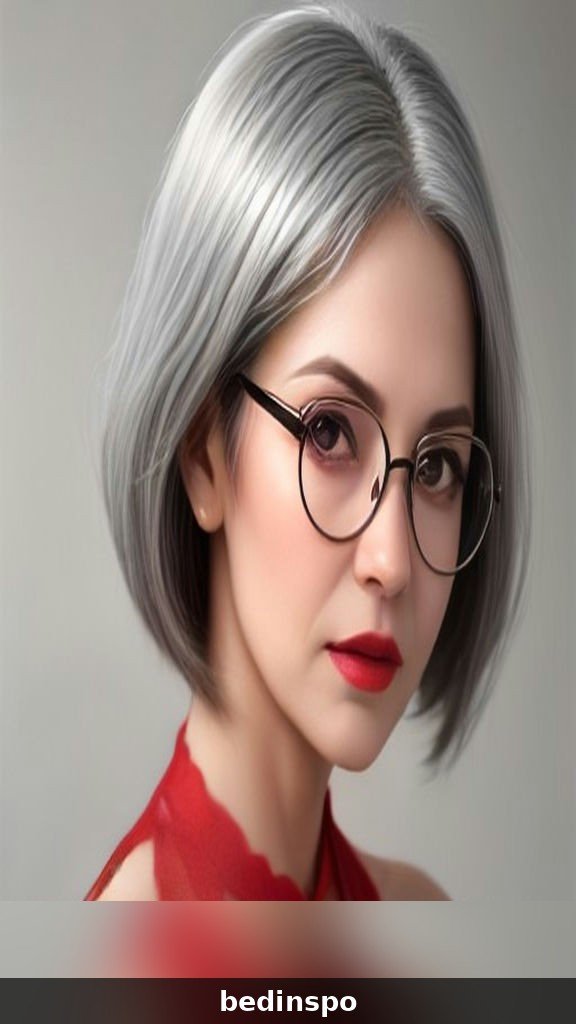
Where the soft bob is romantic, the chic grey bob is architectural: a cleaner line, a smoother finish, a jaw-grazing length worn with a center or deep side part. On fully grey or silver hair it looks like cut glass — modern, confident, and quietly luxurious.
This bob lives or dies on condition and shine, so pair it with a glossing treatment every few weeks and a smoothing serum on the ends. It’s best on straight to slightly wavy hair with medium density — very fine hair may prefer the layered bob’s softness — and it’s a spectacular choice with glasses and strong features.
If your style icons wear tailored coats and red lipstick at 70, this is your haircut. It asks for a flat iron pass on styling days, and returns the favor by making every outfit look deliberate.
Feathered and Wispy Cuts: The Updated Classic
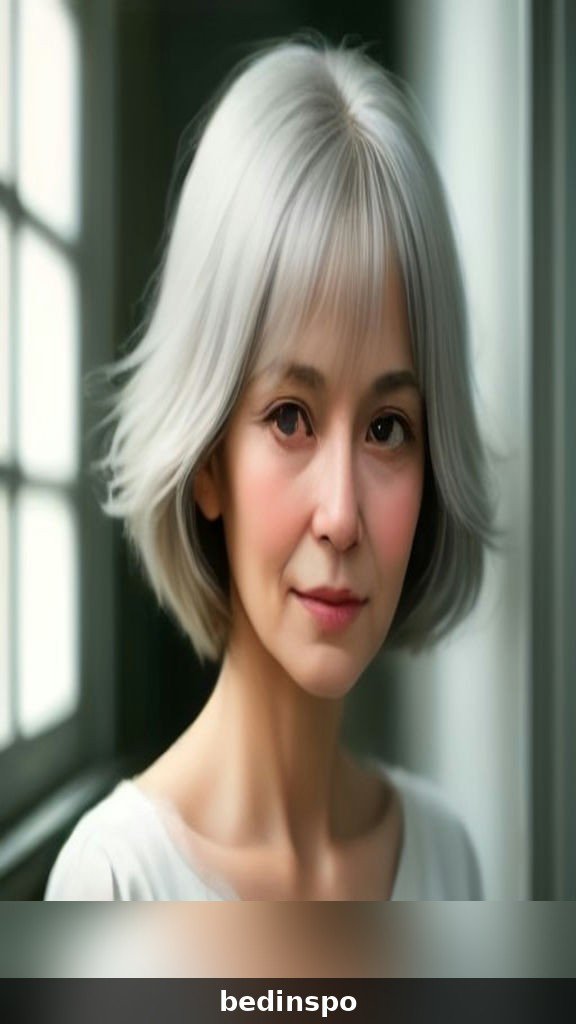
Feathered hair never really left — it just got softer. The modern feathered cut takes the beloved shape (layers flicking away from the face, wispy ends, volume at the crown) and removes the helmet-like finish of the past. Today’s version is cut with a razor or point-cut shears for airy, separated ends, and styled with fingers instead of a shellac of spray.
This is one of the kindest cuts for fine and thinning hair, because the feathering creates overlapping layers that camouflage sparse areas, especially around the part and hairline. A wispy fringe — light, see-through, brow-skimming — pairs perfectly and softens the forehead without the heaviness of a blunt bang.
Blow-dry with a round brush, flicking the layers back, and finish by loosening everything with your fingers. The goal is “feathered and fresh,” never “set.” If you loved this shape in the 80s, welcome back — it’s better now.
Hairstyles for Women Over 60 with Glasses
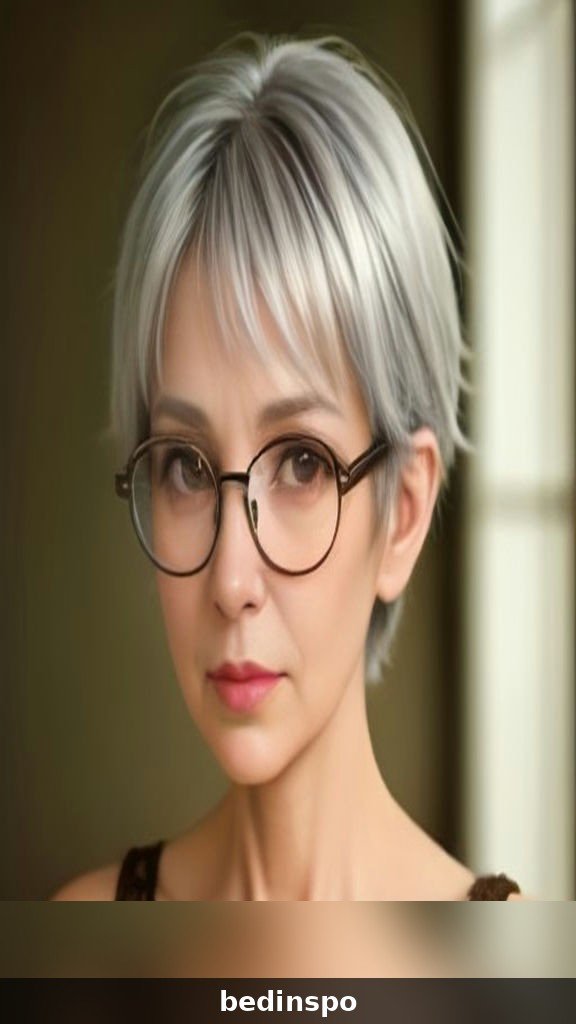
Glasses are an accessory you wear every day, so your hairstyle should be designed with them, not around the problem of them. The principles are simple: keep the sides clean so hair and frames don’t tangle, balance the visual weight of your frames with your hair’s volume, and use your fringe wisely.
Tapered sides, tucked-behind-the-ear bobs, and pixies all keep the temple area tidy where glasses arms sit. If your frames are bold and dark, a softer, lighter hairstyle balances them; if your frames are rimless or delicate, you can wear more hair volume and drama. Side-swept bangs are the most glasses-friendly fringe — they never collide with frames — while straight bangs should be cut just above the frame line if you love them.
Bring every pair of glasses you rotate to your salon appointment, and put them on before the first cut. A great cut-plus-frames combination makes both look more expensive.
Long Hairstyles Over 60: Yes, You Absolutely Can
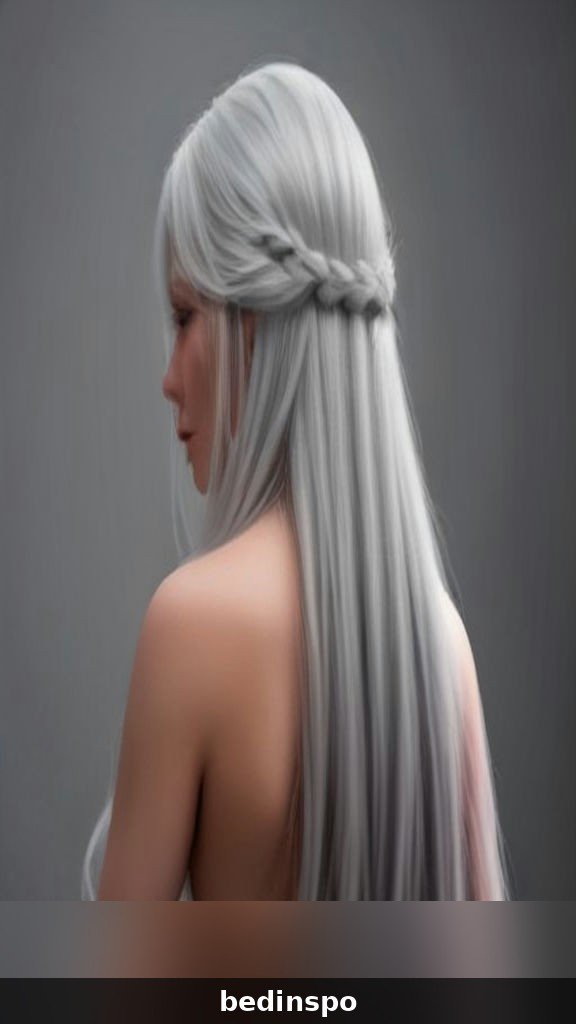
Let’s settle this: the rule that women must cut their hair short at a certain age is not a rule. It’s a leftover. Long hair over 60 — especially long silver hair, worn loose and glossy — is one of the most striking looks a woman can have, and plenty of women are proving it daily.
Long mature hair works when it’s healthy, layered, and honest. Keep length at a point where the ends still look full (for many women that’s mid-back at most), add long layers so it moves, and invest in condition: weekly masks, glosses for shine, and trims every 8–10 weeks to keep ends dense. Long layers and a side part keep the style lifted rather than dragging.
If your hair has thinned significantly, long hair can emphasize it — that’s the only real exception. Otherwise? Grow it, braid it, wear it down at the farmer’s market. Age has never once been a hair length.
Short Natural Curls and Grey Afro-Textured Styles
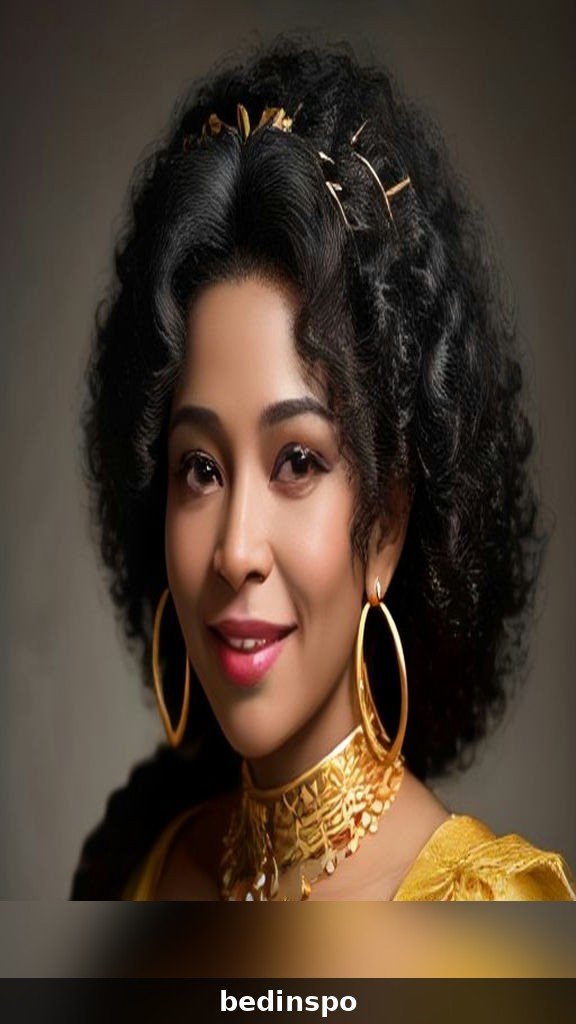
For Black women over 60, natural hair in its silver glory is breathtaking — a silver tapered cut, a grey twist-out with defined coils, or a short silver afro shape that crowns the head like a halo. Salt-and-pepper color in textured hair has a dimension and sparkle that photographs like starlight.
Shape is everything: a tapered cut (fuller on top, close at the sides) is modern and face-lifting, while a rounded shape reads soft and classic. Grey textured hair tends to be drier and more fragile, so moisture routines matter — leave-ins, butters, satin bonnets, and low-manipulation styling keep silver coils strong and defined.
Silver locs deserve a special mention: mature locs in grey and white are regal beyond words, and keeping them at a manageable length with regular retwists keeps the look polished. Whatever texture you were given, silver makes it a statement.
Embracing Silver: Color and Shine Care That Makes Grey Gorgeous
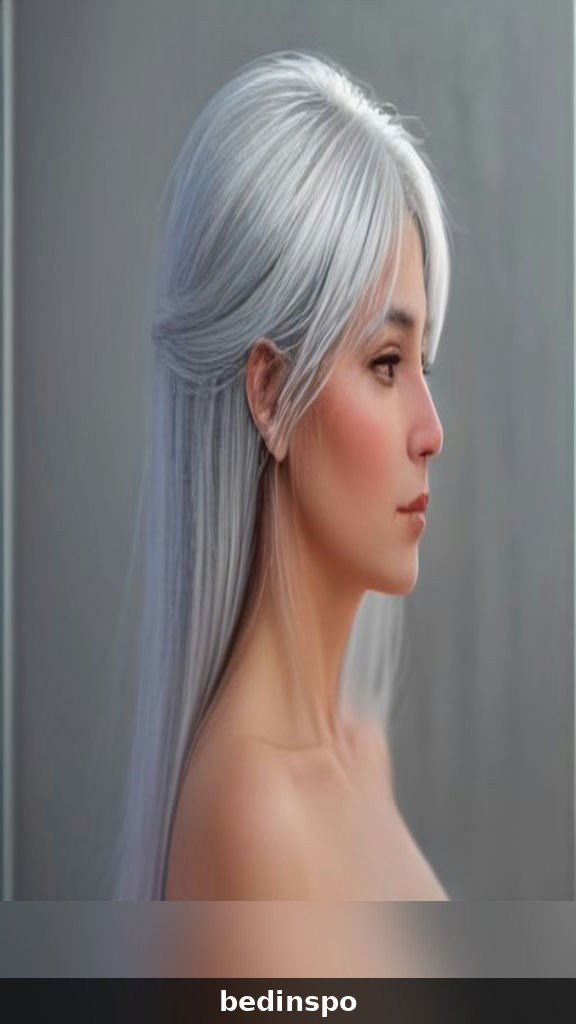
Silver hair is a color with its own care manual. Grey strands lack melanin, which makes them more vulnerable to yellowing from sun, heat, minerals, and product buildup. The fix is a simple trio: a purple or blue-toned shampoo once a week to neutralize brassiness, a clarifying wash once a month to remove dulling buildup, and UV protection (a hat counts!) in strong sun.
Texture changes too: grey hair grows in wirier and drier because oil glands slow down. Compensate with richer conditioners than you used at 40, a leave-in on the ends, and glossing treatments that smooth the cuticle so silver reflects light like metal instead of scattering it like wool. If full grey isn’t your choice, that’s equally fine — lowlights woven through silver create a dimensional salt-and-pepper blend that grows out softly and slashes salon visits.
Either way, treat silver as a luxury color, because handled well, that’s exactly what it looks like.
Hairstyles for Thinning Hair Over 60
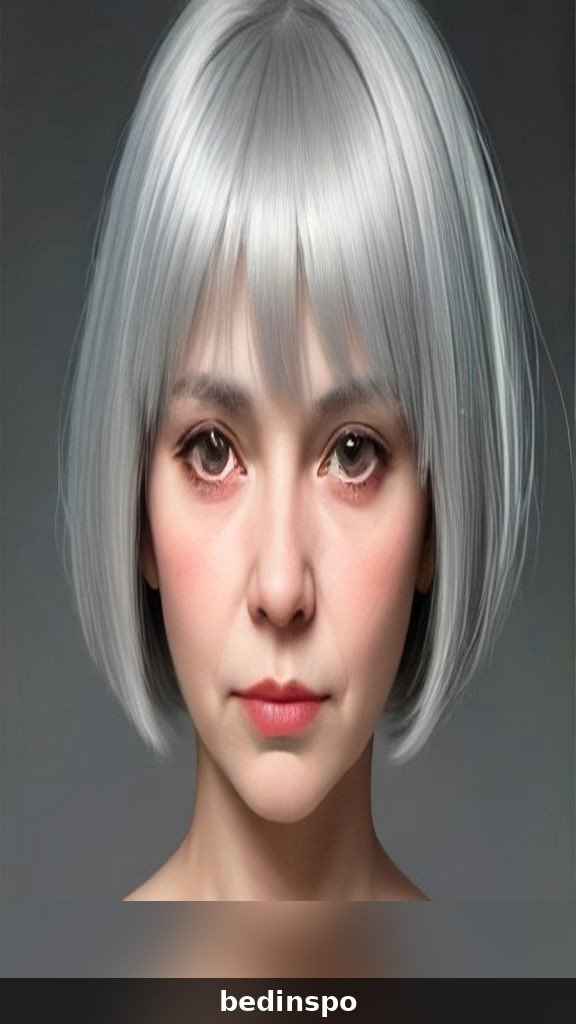
Thinning is the most common hair concern after 60, and the right hairstyle genuinely helps. The strategy is concentration and camouflage: shorter lengths (bob and above) that keep strands together, blunt-ish ends instead of wispy ones, and layering that directs hair over thinner areas — a deep side part, for example, piles coverage over a thinning crown.
Top picks: the soft layered bob, the long pixie with a substantial fringe (a full front hides a sparse hairline), and the feathered crop, whose overlapping layers are camouflage by design. Avoid center parts on a thinning crown, avoid lengths past the shoulders, and avoid heavy products that separate strands and expose scalp.
Two honest helpers: a shadow root or slightly deeper color at the roots reduces scalp contrast, and scalp-toned styling fibers or root powders fill in a part line in seconds. And if thinning is new or sudden, mention it to your doctor — sometimes it’s a thyroid or vitamin story with a real fix, not just an age story.
Easy Wash-and-Go Styles for Real Life
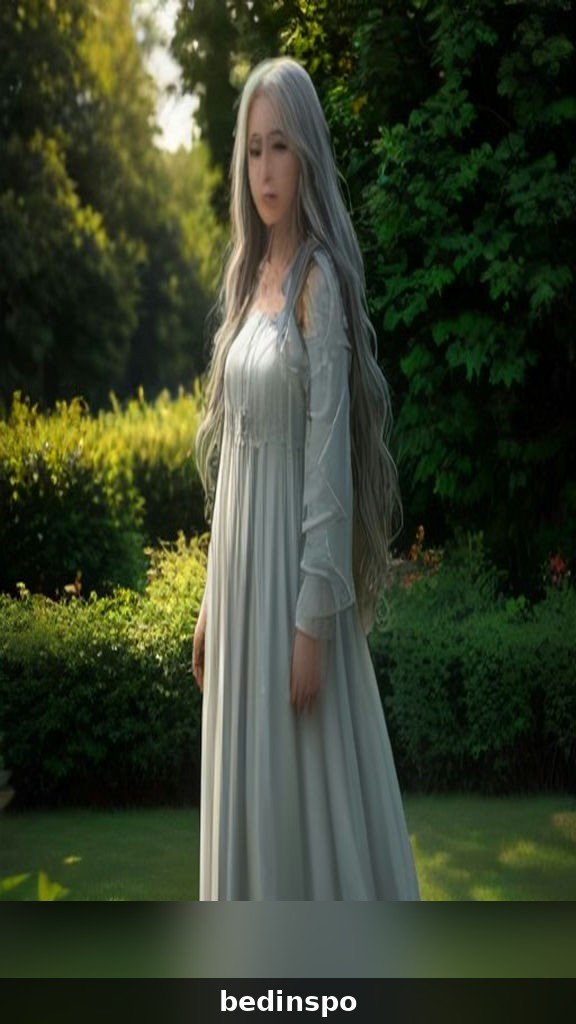
The most elegant hairstyle is the one you’ll actually wear on a wet Wednesday with the grandkids coming at nine. Wash-and-go styles are cut so your natural texture does the work: the layered crop for wavy hair, the curly bob for curly hair, the soft bob for straight hair with a little mousse and air-dry.
Tell your stylist the truth about your routine — “I don’t blow-dry” is essential information, not a confession. Cuts that require heat to look right will sit unworn like a dress that needs dry cleaning. The test of a wash-and-go cut: it should look good with one product and five minutes, because that’s the styling reality of a full life.
Comfort counts too — if arthritis or shoulder trouble makes overhead drying hard, mention it. Shorter cuts, lighter tools, and air-dry shapes are all design solutions your stylist can build in from the first snip.
Elegant Updos and Occasion Styles Over 60
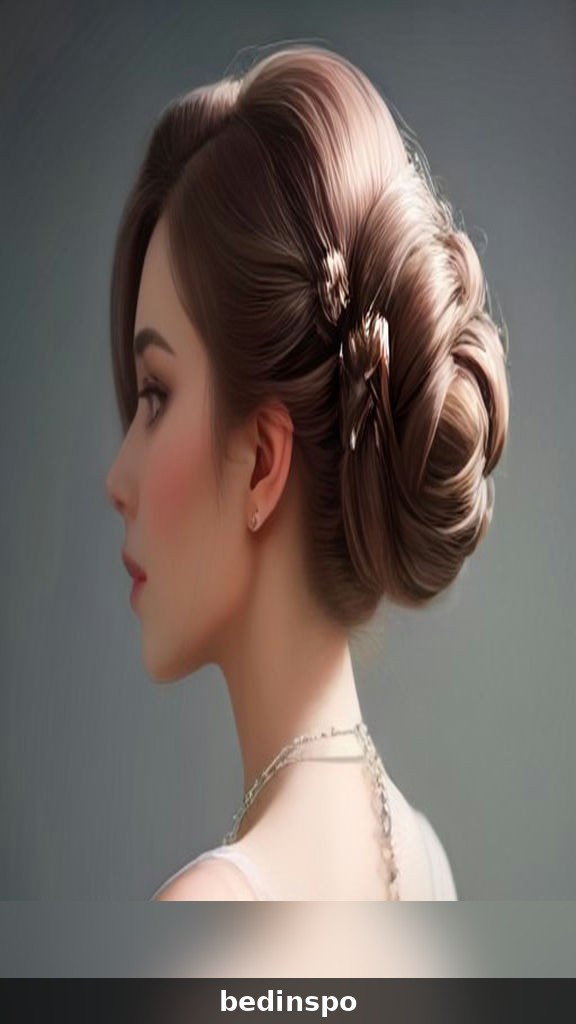
Weddings, anniversaries, holiday photos — occasions call for a little ceremony, and shoulder-length or longer hair over 60 has lovely options. A low chignon at the nape is timeless and soft; a French twist reads formal and elongates the neck; soft waves gathered loosely to one side are romantic without looking “done up.”
For shorter hair, elegance comes from finish rather than architecture: a sleek side part, a jewelled clip or comb at the temple, and glossy, polished texture. Silver hair with a pearl or crystal accessory is genuinely red-carpet. Keep occasion styles soft at the front — a few face-framing pieces left loose keep the look modern and kind, while scraped-back severity helps no one at any age.
Book a trial if it’s a big event, bring your outfit’s neckline into the plan (updos love a bare shoulder or high collar), and let your hair be the finishing touch rather than the project.
Frequently Asked Questions
What is the best hairstyle for women over 60 with thin hair?
A soft layered bob at chin to collarbone length is the most reliable choice: shorter length keeps strands together, soft layers add movement, and a side part covers a thinning crown. Blunt-ish ends and root-lifting styling products complete the fullness effect.
Should women over 60 have bangs?
If you like them, absolutely. Wispy and side-swept bangs are the most flattering options — they soften the forehead, hide a sparse hairline, and draw attention to the eyes. The only bangs to avoid are heavy, blunt ones cut from far back, which can overwhelm fine hair and expose thinning at the part.
How do I keep my grey hair from looking dull and yellow?
Use a purple shampoo once a week to cancel yellow tones, clarify monthly to remove buildup, condition richly to smooth the coarse grey texture, and protect hair from high heat and strong sun, both of which yellow silver. A clear gloss treatment every month or two restores that metallic shine.
Is long hair okay after 60?
Yes — long hair after 60 looks wonderful when it’s healthy, layered, and trimmed regularly so the ends stay full. The only caution is significant thinning, which long lengths can emphasize; in that case a bob-length cut will look fuller and more flattering.
Conclusion
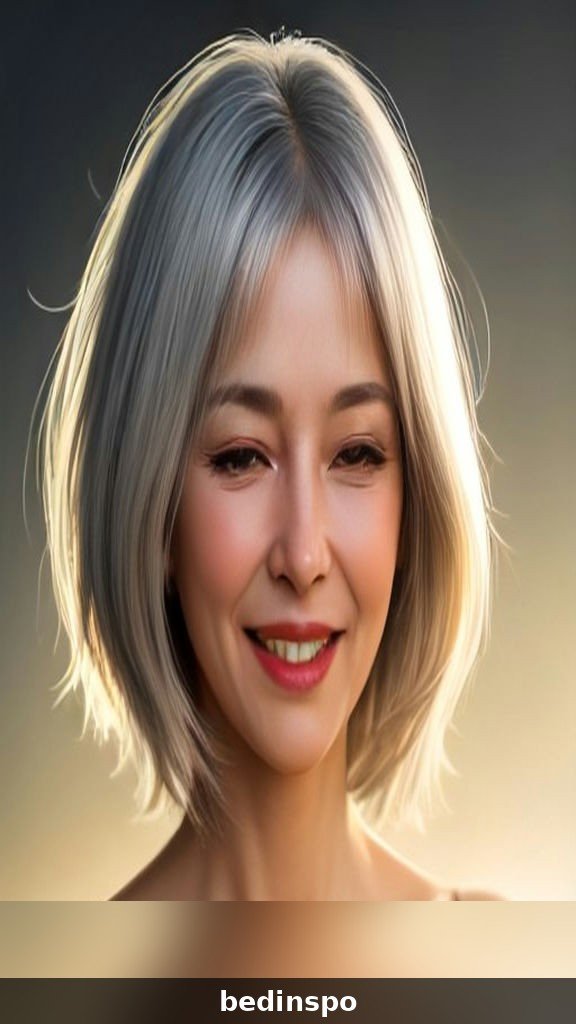
At 60, your hairstyle should be a signature, not a concession. Silver pixie or long grey waves, chic bob or feathered crop — the right choice is the one matched to your hair, your face, and your real life, worn with the confidence of a woman who has earned every strand of that silver. Take your favorite three photos from this guide to your stylist, talk honestly about your routine, and let your hair become one of the best things about how you look right now.
Save this guide to your hair board — and the next time someone suggests a woman your age “should” wear her hair a certain way, smile. You already know better.