Silk Press Hairstyles: 15 Sleek Looks and How to Make Yours Last for Weeks
Silk Press Hairstyles: 15 Sleek Looks and How to Make Yours Last for Weeks
There’s a specific kind of joy in a fresh silk press: hair that swings when you turn your head, catches the light like water, and feels like — well, silk. For women with natural hair, the silk press is the best of both worlds: the sleekness and movement of straight hair, with your curl pattern waiting safely underneath, ready to spring back at the next wash.
But a great silk press is a technique, not an accident. The difference between hair that’s merely flat-ironed and a true silk press — that weightless, bouncy, salon finish — lives in the prep, the products, and the heat discipline. And the difference between a press that lasts three days and one that lasts three weeks lives in your nighttime routine.
This guide covers it all: what a silk press really is, the exact step-by-step method (salon and at-home), fifteen gorgeous silk press hairstyles to try, and the maintenance rules that keep your press fresh and your curls unharmed. Let’s get you swinging.
What Is a Silk Press (and How Is It Different from a Flat Iron)?
A silk press is a complete system for temporarily straightening natural hair: a clarifying wash, deep conditioning, a thorough blowout on stretched hair, and then a careful flat-iron pass — usually one pass per section — finished with little to no heavy product. The name comes from the result: hair with the movement and shine of silk, not the stiff, coated feel of old-school pressing.
The difference from just flat-ironing your hair is everything around the iron. Old methods relied on heavy greases and multiple high-heat passes, which weighed hair down and damaged it. A modern silk press uses lightweight heat protectant, tension and technique instead of brute heat, and hair that’s so well moisturized from the deep condition that it straightens easily and stays bouncy.
No chemicals are involved — your curl pattern is only stretched and smoothed by heat, and it reverts when you wash. That reversibility is the whole point: sleek this week, curly next week, your choice.
How to Get the Perfect Silk Press: The Step-by-Step Method

Step 1: Clarify and Deep Condition
Start with a clarifying shampoo to strip away old product — buildup is the enemy of shine and movement. Follow with a deep conditioner (with heat or a steamer if you have one) for 20–30 minutes. This moisture is what lets hair straighten smoothly and resist reversion later.
Step 2: Detangle and Apply Heat Protectant
Detangle in sections while hair is wet and slippery. Apply a lightweight leave-in and, crucially, a heat protectant rated to at least 400°F. Yes, the protectant matters even if your hair “never burns.” Distribute it through every section — the pieces you skip are the pieces that frizz.
Step 3: The Blowout Is the Press
Blow-dry in small sections with tension — a paddle brush, comb attachment, or brush dryer — until hair is fully dry and stretched. Here’s the secret professionals know: hair that leaves the blowout smooth needs only one light iron pass. Hair that leaves it puffy will never press well, no matter how many passes you burn into it.
Step 4: One Pass, Right Temperature, Small Sections
Work in half-inch sections. Temperature by texture: 350–380°F for fine hair, 400–430°F for medium to coarse hair. Use the chase method — a fine-tooth comb running just ahead of the iron — for glass-like results in a single pass. Then trim if needed: a silk press is the perfect time to see and snip split ends honestly. Finish with the tiniest drop of lightweight serum, or nothing at all.
Classic Bone-Straight Silk Press

The icon. Bone-straight silk press hair is all about precision: a sharp center or side part, ends cut blunt and even, and that mirror shine from root to tip. It’s the style that makes people ask if it’s a wig or a weave — and the compliment is the point.
Bone-straight works at every length but is most dramatic at bra-strap and beyond, where the swing is unmistakable. Keep it perfect by wrapping nightly (see the routine below) and resisting the urge to “touch up” with the iron mid-week; a steamy shower with your hair wrapped and a shower cap will refresh it better than more heat. Edge control on a soft brush keeps the hairline sleek without product buildup.
Silk Press with Curtain Bangs

Curtain bangs on a silk press are the cool-girl upgrade: face-framing layers that sweep open at the cheekbones, blending into long, silky lengths. They soften the severity of a straight style, draw attention to the eyes, and give the press a “styled” finish rather than a plain one.
Ask your stylist to cut the curtain bangs while the hair is pressed, so the length is honest — bangs cut on curly hair spring up and surprise you. Style them with a quick round-brush roll in the morning; they take thirty seconds to revive. If your hairline is your concern, curtain bangs are also wonderful camouflage, covering the temples while looking completely intentional.
Body Wave Silk Press: Straight with a Secret

Love the silk press shine but miss your volume? The body wave silk press starts with the same silky straight base, then adds big, loose bends through the mid-lengths and ends with a large-barrel iron or flexi rods overnight. The result: hair that moves like a 90s supermodel blowout — straight at the root, glamorous at the ends.
This style is forgiving as it ages, too. Where bone-straight hair shows reversion obviously, body waves disguise a little puff at the root as intentional volume. Set the waves with pin curls or a loose high bun at night to preserve them, and brush through with a paddle brush in the morning for that seamless, expensive finish.
The Silk Press Bob: Short, Sharp, Shiny

A silk press bob is pure polish. Whether it’s a chin-length blunt bob, an asymmetrical cut, or a lob grazing the shoulders, pressing a bob takes it from everyday to editorial — the shape is architectural, the shine is the accessory.
Shorter hair presses faster and holds the style longer (less weight, less friction against clothes), which makes the bob a practical silk press choice, not just a chic one. A center part with tucked-behind-the-ear styling is the modern classic; a deep side part with a swoop is pure glamour. Keep ends trimmed religiously — a bob’s whole power is in that crisp perimeter, and a press shows every split end.
Silk Press with Curls and Bouncy Ends

For the woman who wants it all: the silkiness of the press with the romance of curls. After pressing, curl the hair in large sections — a 1.25-inch iron, curls wound and pinned to cool — then shake out into bouncy, glossy curls that gradually relax into waves over the week. It’s a style with a storyline: formal curls on day one, soft waves by day four.
This is the go-to silk press style for events, photos, and holidays because it reads “done” in pictures and flatters every face shape. The trick is letting curls cool completely in their pins before releasing; warm curls dropped early fall by dinner. A light mist of flexible hairspray (never stiff) sets them without crunching away the silkiness you worked for.
The Silk Press Ponytail: Sleek Meets Practical
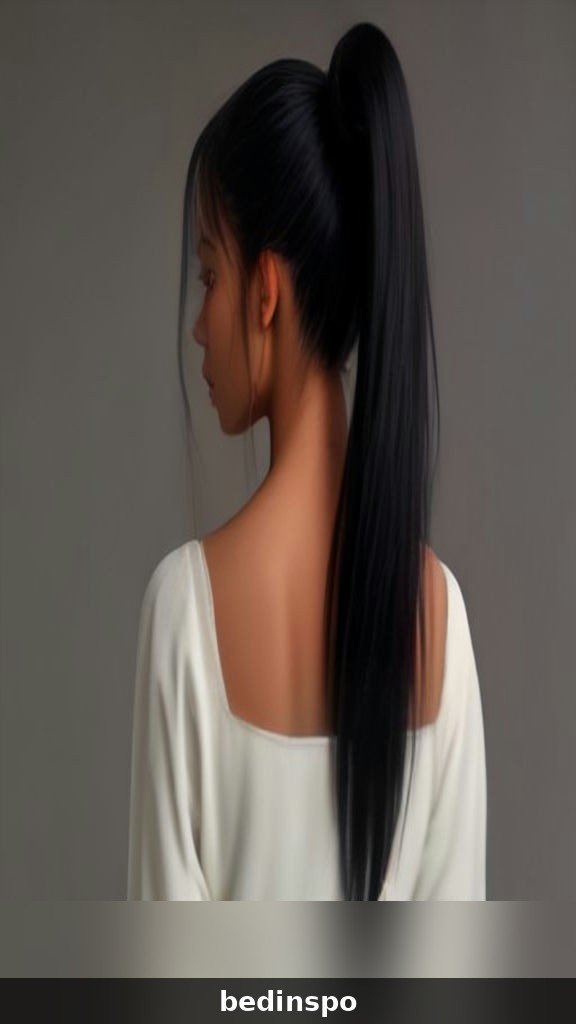
By week two of a press — or on gym days, humid days, and bad-hair mornings — the silk press ponytail is the save. Because the hair is already straight and smooth, a pressed ponytail has that snatched, glossy, model-off-duty look that curly ponytails can’t replicate: sleek through the crown, swinging at the tail.
Smooth hair back with a boar brush, secure at mid-height or low at the nape for elegance, and wrap a small strand around the base to hide the band. A high pony with the ends curled is playful; a low, center-parted pony is pure sophistication. The ponytail also protects your press — hair up off your neck and shoulders picks up less moisture and friction, so styling it up can actually extend the press’s life.
Long Silk Press with Layers

Long layers are what turn a long silk press from a sheet of hair into a hairstyle. Layers through the bottom third and around the face remove bulk, create movement, and give the ends that feathered, swishy quality that catches light with every step. Face-framing layers starting at the chin are universally flattering.
If your goal is length, the silk press is also your measuring tool: pressing reveals your true length and the true state of your ends, making it the ideal moment for a “dusting” trim that removes damage without sacrificing progress. Many women on a growth journey press two to four times a year specifically for these health checks — sleek style and honest trim in one appointment.
Silk Press on Short Natural Hair

Short naturals, you are not left out — a silk press on a TWA or short tapered cut is adorable and versatile. The press stretches short curls into a sleek pixie-like shape that can be worn smooth and side-parted, molded into finger waves for vintage glamour, or flipped at the ends for a retro kick.
Short hair presses quickly and needs lower temperatures (fine, short sections overheat fast), and the style is wonderfully low-maintenance for about a week. It’s also a great way to enjoy a dramatic change — from curly fro to sleek crop — without a single snip of commitment. When you’re ready for your curls back, one wash restores them.
How to Make a Silk Press Last Two Weeks or More

Longevity is a lifestyle, not luck. Moisture is the enemy: shower caps for every shower (double cap on wash days), a sweatband or scarf for workouts, and umbrella discipline in the rain. Friction is the other enemy: satin or silk at night — pillowcase, bonnet, or scarf, no exceptions. Product discipline: heavy creams and water-based moisturizers will revert and weigh down a press; if your ends feel dry, use the tiniest amount of lightweight oil on the ends only.
And the golden rule: do not re-iron the whole head. Every extra heat session is damage dressed as maintenance. If a section puffs, smooth just that section on lower heat with protectant — or better, rollerset or pin-curl it overnight and let styling, not heat, do the work. A well-executed press with good habits lasts two weeks easily; many women stretch to three.
The Nighttime Routine: Wrapping, Pin Curls, and the Pineapple

Night is where presses are saved or lost, and you have three good options. The wrap: brush hair around your head in a circle, following its shape, pin flat if needed, and tie down with a silk scarf. This keeps hair bone-straight and is the classic choice. Pin curls: twist sections into loose pin curls and secure — you’ll wake with body and bend, perfect for pressed styles with waves or curls. The loose top bun or pineapple: gather hair loosely at the very top with a satin scrunchie; quick, comfortable, and ideal for preserving volume at the roots.
Match the method to the style: wrap for straight, pin curls for curled, bun for body wave. Five minutes nightly is the entire price of a two-week press — the best deal in hair care.
Silk Press vs. Keratin Treatments and Relaxers
They all make hair straight, but they’re fundamentally different commitments. A relaxer permanently breaks the hair’s bonds — the straight hair is forever, new growth is curly, and the chemical process carries the highest damage and scalp-risk profile. A keratin treatment coats and semi-permanently smooths hair for 3–5 months, reducing frizz and loosening curl, but involves strong chemicals (some with formaldehyde concerns) and gradually fades. A silk press changes nothing chemically — it’s heat and technique only, fully reversible at your next wash, with damage risk only from heat misuse.
Choose a press if you love your curls and want occasional sleekness. Choose keratin if humidity is your nemesis and you want months of easier styling. Choose a relaxer only with full information and a professional you trust. There’s no wrong answer — only the answer that matches the hair life you actually want.
How Often Can You Silk Press Without Damage?

The honest answer: it depends on your hair’s health and your technique, but most stylists consider a press every 3–4 weeks the safe rhythm for healthy hair, with many women pressing monthly or seasonally. The damage from a silk press doesn’t come from the press itself — it comes from excessive temperature, multiple passes, pressing dirty or unprotected hair, and pressing hair that was already compromised.
Watch for the warning signs of heat damage: curls that don’t revert fully, straight pieces in your wash-and-go, increased breakage. If you see them, take a heat break, deep condition weekly, and trim. Healthy hair, a good protectant, one pass, and a sensible temperature will keep your curls popping back press after press. Your hair should always have the final vote — if it’s thriving, your routine is right.
Frequently Asked Questions
How long does a silk press last?
Typically 1–3 weeks depending on your hair, the weather, and your maintenance. With nightly wrapping, shower caps, and no re-ironing, two weeks is a realistic standard; humid climates and sweaty workouts shorten the run, while winter’s dry air extends it.
Will a silk press damage my natural hair?
Done correctly — clean hair, deep conditioning, heat protectant, right temperature, one pass — a silk press should not damage your hair, and your curls should revert fully at the next wash. Damage comes from repeated passes, excessive heat, and pressing too often, not from the technique itself.
Can I silk press my hair at home?
Yes. The at-home keys are a quality flat iron with temperature control, a good blow-dry (the blowout determines the press), small sections, and patience. Your first home press may not match a salon’s, but by the second or third, most women get results they’re proud of.
What temperature should I use for a silk press?
Start lower than you think: 350–380°F for fine or fragile hair, 400°F for most medium textures, up to 430°F for very coarse, resistant hair. If you need more than one pass at a sensible temperature, the issue is usually the blowout or section size, not the heat.
Conclusion

A silk press is natural hair’s greatest party trick: all the swing, shine, and sleekness of straight hair — with your curls safely on pause, not erased. Master the prep, respect the heat, wrap it at night, and your press will repay you with two weeks of effortless glamour, whether you wear it bone-straight, banged, waved, bobbed, or curled.
Save this guide for your next press day, book the trim your ends have been asking for, and enjoy the swing. Your curls will be right there waiting when you wash — that’s the beauty of the press.