Red Hair: The Complete Guide to Shades, Coloring and Care
Red hair turns heads wherever it appears. It can be a deep, moody burgundy, a glowing copper or a bold, fiery red. It is rare in nature and popular in salons, which is why so many people ask how to get it and how to keep it. Red is also one of the trickiest colors to maintain, because red dye molecules are larger and fade faster than other shades. In this guide, you will learn what red hair is, how natural red differs from dyed red and which shade suits your skin tone. You will also find advice on coloring, salon visits, fade prevention, hairstyles and common mistakes to avoid.
What Is Red Hair?

Red hair is a color that ranges from pale strawberry blonde to deep auburn and dark burgundy. Natural red hair is one of the rarest hair colors in the world, found in only a small percentage of the global population. It is most common in people of Northern and Western European ancestry, especially in places like Scotland and Ireland. Dyed red hair can be created on almost any base color, from blonde to brunette, though the result depends on your starting shade. The red family covers warm tones like copper and orange-red, cool tones like cherry and burgundy, and everything in between. Because the range is so wide, almost anyone can find a red that works for them.
The Science Behind Natural Red Hair

Natural red hair comes from a particular type of pigment. Most hair color is determined by melanin, which comes in two forms: eumelanin, which creates brown and black shades, and pheomelanin, which creates red and yellow tones. Red-haired people have high levels of pheomelanin and low levels of eumelanin. This is usually linked to variations in a gene called MC1R, and a person typically needs to inherit the variant from both parents to have red hair. This is why red hair can seem to skip generations. Pheomelanin is also less protective against sun exposure than eumelanin, which is why many natural redheads have fair skin and need to be careful with sunscreen. Natural red hair often turns lighter or more muted with age instead of darkening.
Why Red Hair Is So Popular

Red is one of the most eye-catching colors you can wear. It adds warmth and vibrancy and makes a strong personal statement. Many people choose red because it feels confident, creative and a little bit daring. Red also photographs beautifully, since it contrasts with most backgrounds and brightens the complexion. Another reason for its popularity is variety. You can go subtle with a soft copper gloss or dramatic with a rich cherry red. Celebrities, social media creators and fashion trends keep bringing red back into the spotlight every season. It also suits every season, from warm autumn coppers to bold winter burgundies, which makes it a color you can keep reinventing.
Natural Red Hair vs Dyed Red Hair

Natural red hair has depth, with many tones woven together, such as golden, copper and light amber strands in the same head. Dyed red can look flatter if it is one solid shade, but a skilled colorist can recreate dimension with layered tones. Natural red hair also tends to be thick in diameter and often has a lot of strands per head. It holds onto its color for life, though it can fade to lighter or grayer shades with age. Dyed red, on the other hand, fades with every wash and needs regular refreshing. Dyed red hair is also more likely to feel dry, particularly if it was bleached first. Both can look stunning, but dyed red needs a more careful routine to stay bright and healthy.
Popular Shades of Red Hair

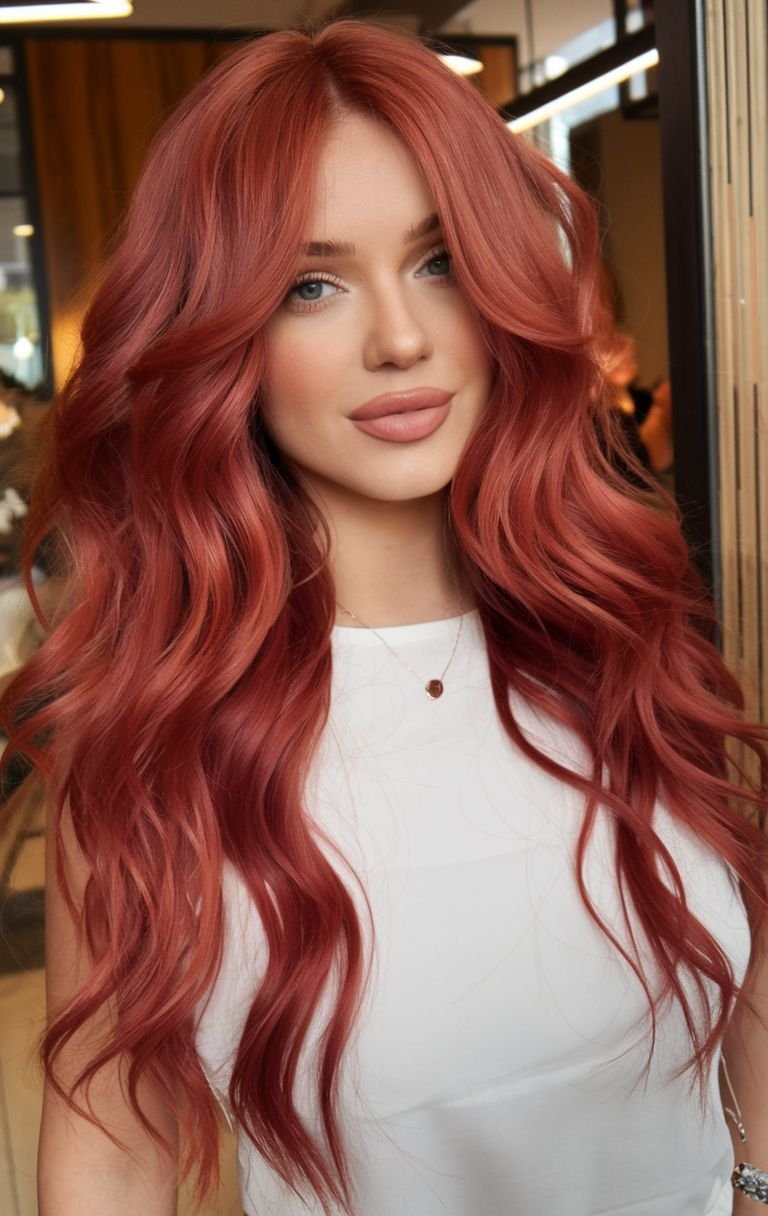
The red spectrum is much larger than most people expect. Copper is a warm, orangey red with a metallic glow. Auburn blends red and brown for a natural, earthy finish. Ginger is a bright orange-red that leans playful and sunny, while strawberry blonde mixes light blonde with soft red or pink tones. Cherry red and ruby red are cooler and more vivid, with a slightly pink or blue base. Burgundy and wine red are deep, dark shades with purple undertones, and mahogany adds a brown, chocolate-like richness. Fire engine red is the boldest of all, with a bright, saturated look. Browsing these options helps you decide how dramatic you want to go and how much maintenance you are willing to take on.
Choosing the Right Red for Your Skin Tone

The most flattering red depends on your undertone. People with warm undertones, who tend to have golden or peachy skin, usually look great in copper, ginger, auburn and golden red. Cool undertones, with pink or bluish hints in the skin, tend to suit cherry, ruby, burgundy and blue-based reds. Neutral undertones can wear almost any red, though a balanced auburn or true red is a safe place to start. Eye color matters too. Green and hazel eyes pop with copper and auburn, while blue eyes are striking against both warm and cool reds. If you are unsure, ask your colorist to hold swatches near your face in natural light. A shade that makes your skin look bright and healthy is usually the right one.
Copper and Auburn Hair

Copper and auburn are among the most wearable reds because they look natural and flattering on many complexions. Copper has a bright, orangey warmth that glows in sunlight, while auburn is deeper and leans toward brown. Both work well on light brown or dark blonde bases, which means you may not need to bleach your hair much. Auburn is a good choice for people who want a subtle change, because it blends well with natural brown tones and grows out gracefully. Copper suits those who want more visible color and brightness. To keep either shade rich, use a color-depositing conditioner and avoid very hot water. Adding soft highlights or lowlights creates dimension and prevents the color from looking flat.
Strawberry Blonde and Ginger Hair
Strawberry blonde sits between blonde and red, with a light, sweet look that suits fair and lightly freckled skin. Ginger is more vivid, with a clear orange-red tone that feels fun and energetic. Both shades are usually created with a lighter base and a custom toner, so they may require some lightening, especially on dark hair. Because they are soft, they can fade quickly, so regular glosses help keep them fresh. Strawberry blonde looks beautiful with a layered cut or loose waves, while ginger shines with a sleek bob or long curls. These shades are ideal for people who want something distinct from classic blonde or brunette, without the intensity of a deep red.
Burgundy and Bright Red Hair

Burgundy and wine tones are rich, deep reds that look elegant and sophisticated. They suit most skin tones, especially cool and neutral ones, and they are a great choice for dark brown hair because they often need little or no lightening. Bright red, cherry and ruby shades are bolder and more dramatic. They give a striking, high-fashion look, but they usually need a lighter base to appear vivid. Both categories fade faster than natural-looking tones, so be ready for regular touch-ups. Use sulfate-free shampoo, wash with cool water and consider a red-tinted conditioner to boost vibrancy. A strong lip color or neutral makeup balances these shades, and gold or silver jewelry can complement the tone depending on your undertone.
Red Highlights, Balayage and Ombre
You do not need to dye your whole head red to enjoy the color. Red highlights add warm streaks to brown or blonde hair, creating a subtle, sun-kissed effect. Balayage uses hand-painted color for a soft, natural gradient with an easy grow-out. Ombre moves from a darker root to red ends, giving a bold contrast that is great for long hair. Face-framing red pieces brighten the complexion with minimal commitment. Peekaboo red, where color is hidden underneath the top layer, offers a fun surprise when you move or wear your hair up. These partial techniques use less dye overall, so they are usually easier to maintain. They are also a good way to test whether red suits you before going all in.
How to Dye Your Hair Red

Dyeing hair red depends heavily on your starting color. On light or lightened hair, red takes brightly and evenly. On dark brown or black hair, a permanent red will often show up as a subtle tint, such as burgundy or auburn, unless you lighten first. Begin by choosing your shade, then do a strand test to check the color and timing. Section your hair, apply the color evenly from roots to ends and follow the processing time exactly. Rinse with cool water until it runs clear, then use a color-protecting conditioner. Because red pigment is made of large molecules, it does not stay in the hair as long as other colors. Plan on touch-ups or glosses every four to six weeks to keep it bright.
Salon vs At-Home Red Hair Color
Both options can work, but they suit different goals. A salon colorist can assess your hair history, choose the right base level and create custom shades with multi-tonal depth. This is especially helpful for vivid reds, which need an even base to look their best. Salons can also use bond-building treatments to protect hair if lightening is required. At-home color is more affordable and convenient, and it is a good option for deep reds such as burgundy or mahogany on dark hair. If you color at home, always do a patch test and a strand test, wear gloves and protect your skin and clothing, since red dye stains easily. For dramatic changes, such as dark brown to bright copper, professional help is strongly recommended.
Preparing Your Hair Before Going Red

Healthy hair holds color better, so preparation matters. In the weeks before coloring, use deep conditioning masks and limit heat styling. Trim split ends, since damaged ends absorb color unevenly and tend to fade faster. Avoid using heavy silicone products right before coloring, because buildup can block pigment. If you plan to lighten your hair first, tell your colorist about any past dyes, henna or chemical treatments. Bring inspiration photos taken in natural light so you can agree on the exact shade. Also think about maintenance, such as how often you can visit the salon, and whether a more natural red might suit your routine better. Good planning leads to a more even, longer-lasting result.
Red Hair Care Routine
A consistent routine is the best way to protect red color. Wash your hair only two or three times a week with a sulfate-free shampoo made for color-treated hair. Wash with lukewarm or cool water, since hot water opens the cuticle and lets pigment escape. Follow with a rich conditioner and use a deep conditioning mask weekly. Apply a heat protectant before using hot tools and keep the temperature moderate. A red or copper color-depositing conditioner can refresh your shade between salon visits. Protect your hair from the sun with a hat or UV-protective spray, since sunlight is a major cause of fading. Dry shampoo helps you stretch the time between washes, which keeps your color brighter for longer.

Why Red Hair Fades Fast and How to Prevent It
Red is famous for fading faster than other colors, and there are good reasons for it. The pigment molecules are large and sit near the surface of the hair, so they wash out more easily. Heat, sun, harsh shampoos and hot water speed up the process. To slow fading, wash less often and always use cool water. Choose sulfate-free, color-safe shampoos, and avoid clarifying shampoos unless necessary. Wear a hat in strong sun, and rinse your hair before swimming to limit chlorine absorption. Use a color-depositing mask once a week and ask your stylist about gloss treatments every few weeks. Sleeping on a silk pillowcase also reduces friction that can dull color. With these habits, your red will stay bright much longer.
Best Hairstyles and Haircuts for Red Hair

Red hair looks stunning in almost any style, and the cut you choose can enhance its tone. Long layers and loose waves show off copper and auburn beautifully, while a sleek bob makes bright red look polished and bold. Curly red hair stands out with natural volume and dimension. Soft layers add movement and let multiple tones shine through, and curtain bangs frame the face and highlight the color around it. Braids, half-up styles and low buns work well for showing dimension. For short hair, a textured pixie in a vivid red makes a confident statement. Whatever style you pick, keep the ends healthy, because dryness dulls red tones and makes them look flat.
Makeup, Clothing and Style Tips for Red Hair

Red hair pairs well with the right makeup and clothing. For warm reds, earthy eyeshadows like bronze, gold and olive green bring out the glow, while cool reds look great with plum, navy and soft pink tones. Neutral lip colors keep the focus on the hair, but a bold lip can work when balanced with subtle eyes. Defined brows in a shade close to your hair color keep the face harmonious. In clothing, jewel tones such as emerald, teal, navy and deep purple contrast beautifully with red. Neutrals like cream, black and gray create a clean, modern backdrop. Be careful with colors that clash directly, such as bright orange or hot pink next to copper. Choose shades that make your hair the star.
Common Red Hair Mistakes to Avoid

Several common mistakes can leave red hair dull, patchy or damaged. Washing too often or using hot water strips color quickly. Using harsh shampoos with sulfates also speeds up fading. Skipping heat protectant weakens the strands and dulls shine. Another mistake is choosing a shade that does not suit your undertone, which can make skin look tired or washed out. Some people try to go from very dark to bright red in one step at home and end up with uneven results. Others forget that red dye stains skin, towels and pillowcases, so protect your surroundings after coloring. Finally, ignoring trims and touch-ups makes the color look faded and uneven. Avoiding these mistakes will keep your red looking fresh.
Conclusion
Red hair is bold, beautiful and full of personality, whether it grows naturally or comes from a color service. The key to a great result is choosing a shade that suits your skin tone, preparing your hair properly and committing to a gentle, consistent care routine. Use cool water, sulfate-free products, heat protection and regular glosses to keep the tone vibrant. If you are new to red, start with a softer shade such as auburn or copper highlights before moving to something more dramatic. With the right plan and a bit of patience, your red hair can look rich, glowing and healthy for as long as you wear it.