Neo Deco Living Room Ideas: 15 Glamorous Art Deco Meets Modern Looks
Neo Deco Living Room Ideas: 15 Glamorous Art Deco Meets Modern Looks
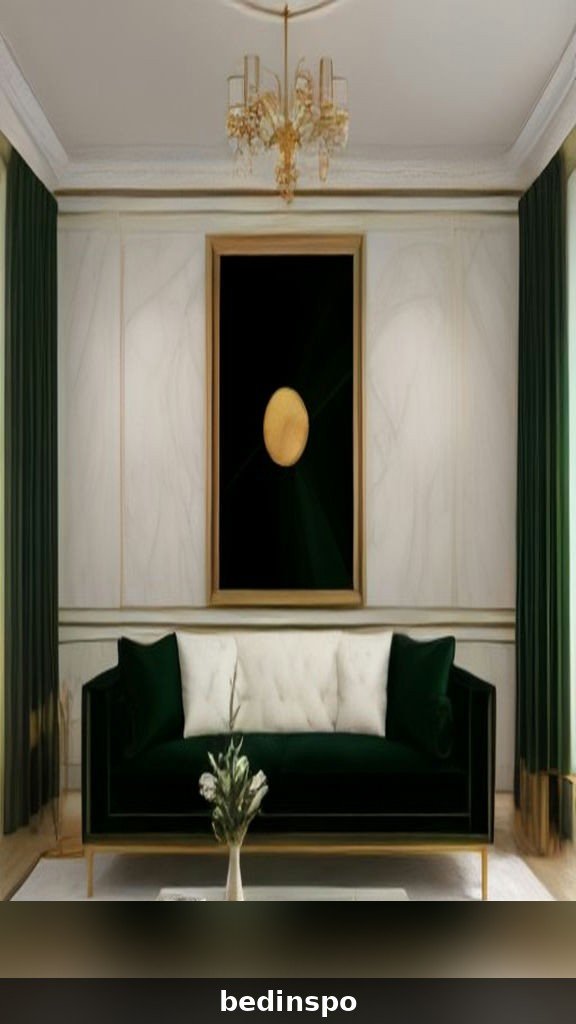
There is a reason art deco never really dies. The 1920s gave us the most glamorous design language in history — bold geometry, lavish materials, gold everything — and a century later, designers are bringing it back with a fresh, modern twist. Enter neo deco: all the drama of classic art deco, softened with today’s love of clean lines, curved silhouettes, and livable comfort. It is the style for anyone who finds minimalism a little cold but maximalism a little chaotic.
Neo deco living rooms are having a major moment, and it is easy to see why. An emerald velvet sofa against a fluted wall, a brass arc lamp curving over a marble coffee table, a sunburst mirror catching the afternoon light — these rooms feel luxurious without feeling stuffy. The look borrows deco’s greatest hits (geometric patterns, mirrored surfaces, jewel tones, gold accents) and pairs them with contemporary shapes and a lighter, airier hand. The result is a living room that photographs like a boutique hotel lobby but still invites you to curl up with a book.
Below you will find 15 neo deco living room ideas, from big statement moves to small weekend-friendly updates, plus a guide to mixing deco glam with modern minimalism and answers to the questions everyone asks about pulling off the look. Whether you go full Gatsby or just borrow a few golden touches, your living room is about to get a whole lot more glamorous.
1. The Emerald Green Velvet Sofa
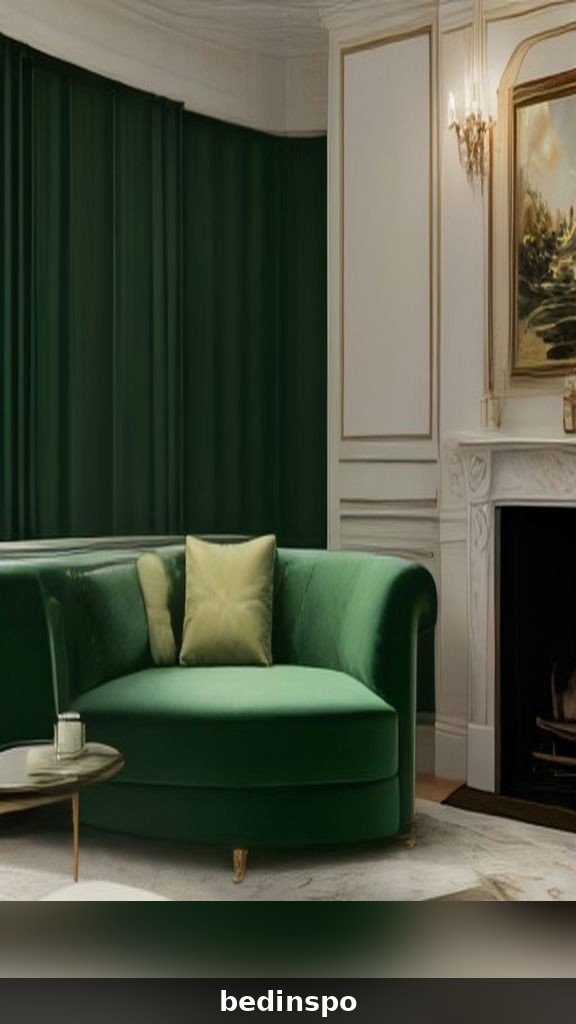
If neo deco has a signature piece, it is the emerald green velvet sofa. Deep, rich, and impossibly lush, emerald velvet captures everything the style is about: jewel-tone color, tactile luxury, and old-Hollywood drama. A well-chosen emerald sofa becomes the anchor of the entire room — the piece every other decision orbits around. Look for a curved or gently rounded silhouette rather than a boxy one; the soft curves keep the bold color feeling modern instead of theatrical.
Style it with intention. Ivory or cream walls let the green glow, while black accents — a side table, a floor lamp base, picture frames — sharpen the look with deco contrast. Brass or gold legs on the sofa itself are the perfect finishing touch. If a full emerald sofa feels like too much commitment, start with emerald velvet accent chairs or even just velvet throw pillows in emerald, sapphire, and ruby. The fabric does the heavy lifting; the color just turns up the volume.
2. The Black and Gold Color Palette
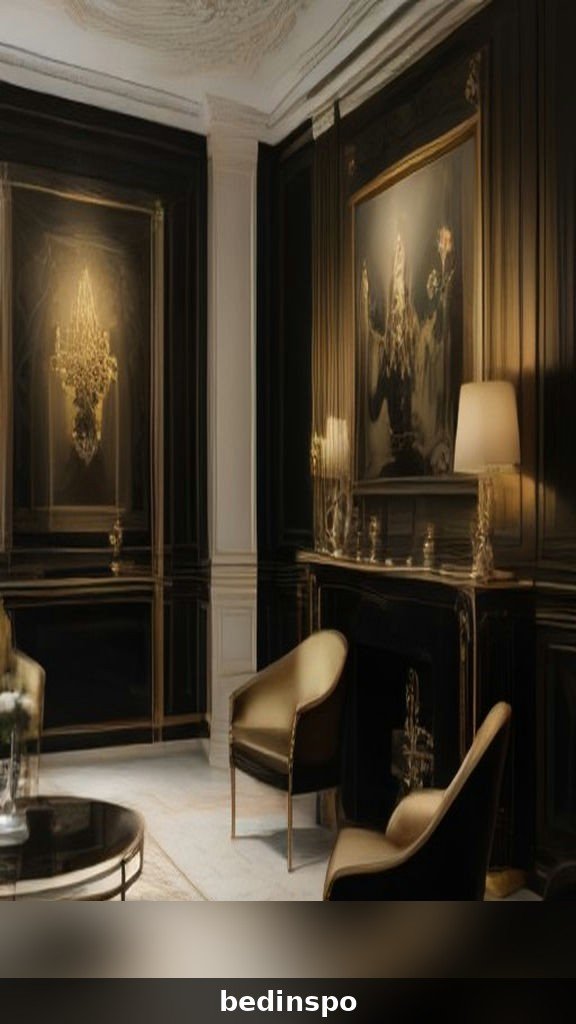
Black and gold is the color pairing that built art deco, and it is the fastest way to give any living room instant neo deco credentials. The combination is pure drama: matte black grounds the room and makes everything feel intentional, while gold — in lighting, frames, hardware, and accessories — adds the glow. Together they create a room that feels expensive even when most of the pieces are affordable.
The trick is proportion. Let black be the structure — a black bookcase, black window frames, a black media console — and use gold as the jewelry: a brass floor lamp, gold-framed art, metallic picture ledges, gold cabinet pulls. Keep the large surfaces (walls, rug, sofa) in softer neutrals like ivory, warm grey, or deep charcoal so the black-and-gold moments can shine. One oversized black-and-gold moment, like a dramatic gallery wall, beats a dozen small ones scattered around.
3. The Iconic Sunburst Mirror
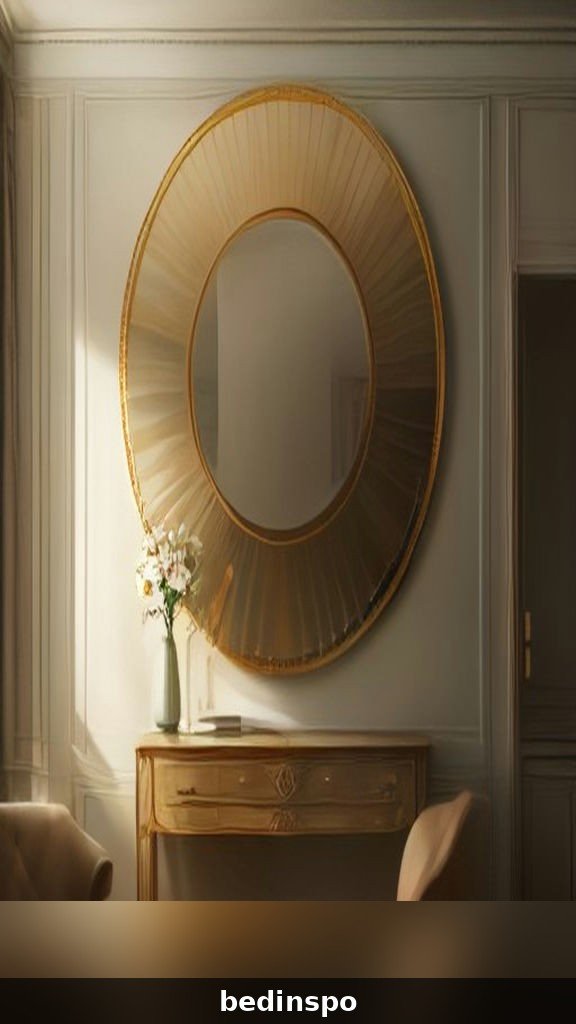
No neo deco living room is complete without a sunburst mirror. Born in the 1920s and 1950s, the sunburst — rays of wood, metal, or rattan radiating from a central mirror — is the single most recognizable deco motif, and it works in literally every room. Hung above a console, a mantel, or a sofa, it becomes an instant focal point that draws the eye and bounces light around the space.
For a modern take, choose a sunburst in brushed brass or matte black rather than shiny gold, and keep the scale generous — a mirror that is too small looks apologetic. A 30-inch-plus sunburst over a console table is the classic placement, but do not be afraid to go bigger over a fireplace. If sunburst feels too literal, the same energy lives in starburst clocks, radial light fixtures, and fan-motif artwork. The radiating shape is the point; the material is up to you.
4. Curved Furniture Silhouettes
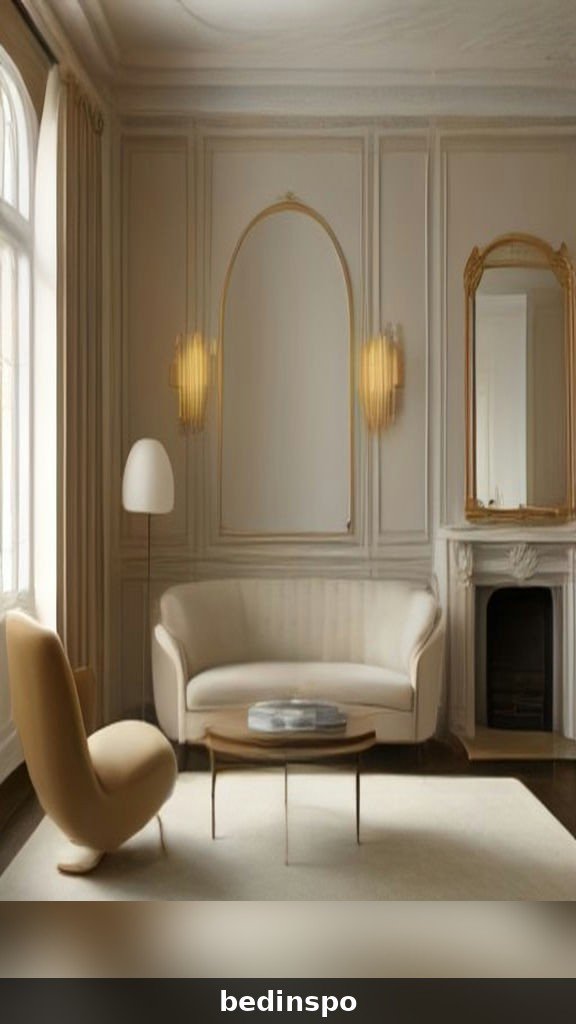
One of the biggest differences between classic deco and neo deco is the silhouette. Where 1920s furniture could be angular and severe, the modern revival loves curves: rounded sofas, barrel chairs, oval coffee tables, arched doorways and mirrors. Curves soften deco’s geometry and make a glamorous room feel welcoming rather than intimidating — the difference between a museum and a home.
Introduce curves gradually if your room is currently all straight lines. A pair of curved accent chairs is the easiest entry point, followed by a round or oval coffee table to break up a rectangular rug. An arched floor mirror or an arched bookcase adds architectural curve without replacing any furniture. The goal is contrast: a few beautiful curves against cleaner-lined pieces create the tension that makes neo deco rooms feel designed rather than decorated.
5. Mirrored and Lacquered Furniture
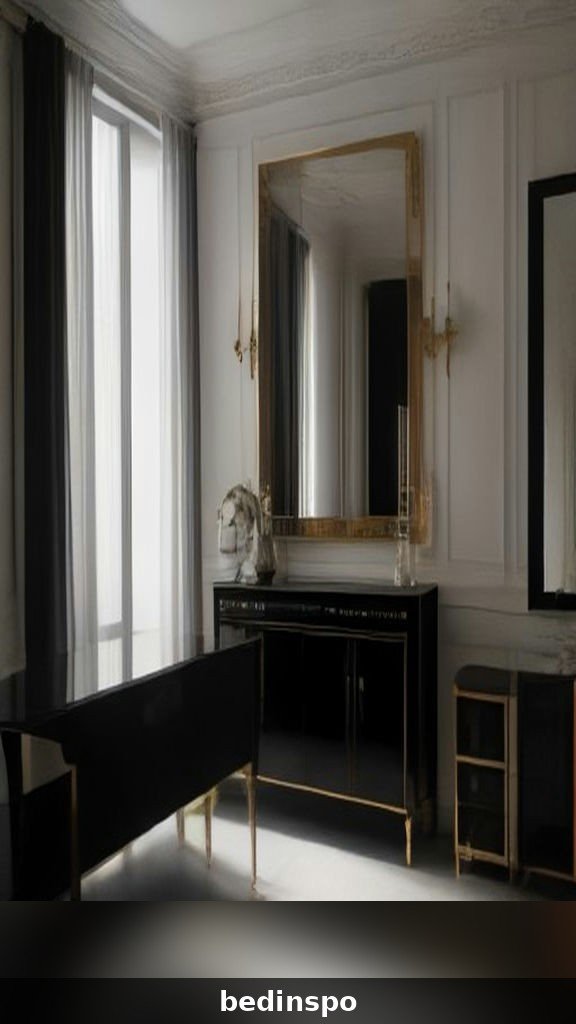
Deco designers were obsessed with reflective surfaces, and neo deco keeps the love affair going. Mirrored nightstands, lacquered consoles, and high-gloss side tables catch the light and make a living room feel larger, brighter, and more luxurious. A mirrored coffee table or a lacquered black credenza adds that unmistakable deco shimmer without a single gold accessory.
Use reflective furniture strategically, not everywhere. One mirrored or high-gloss piece per room is plenty — more than that starts to feel like a showroom. A mirrored console in an entryway-adjacent living room wall, or a lacquered side table next to a velvet chair, gives you the glow without the glare. Pair reflective pieces with soft textures (velvet, wool, boucle) so the room balances shine with warmth. And keep glass cleaner handy; the whole point is the reflection.
6. The Geometric Area Rug
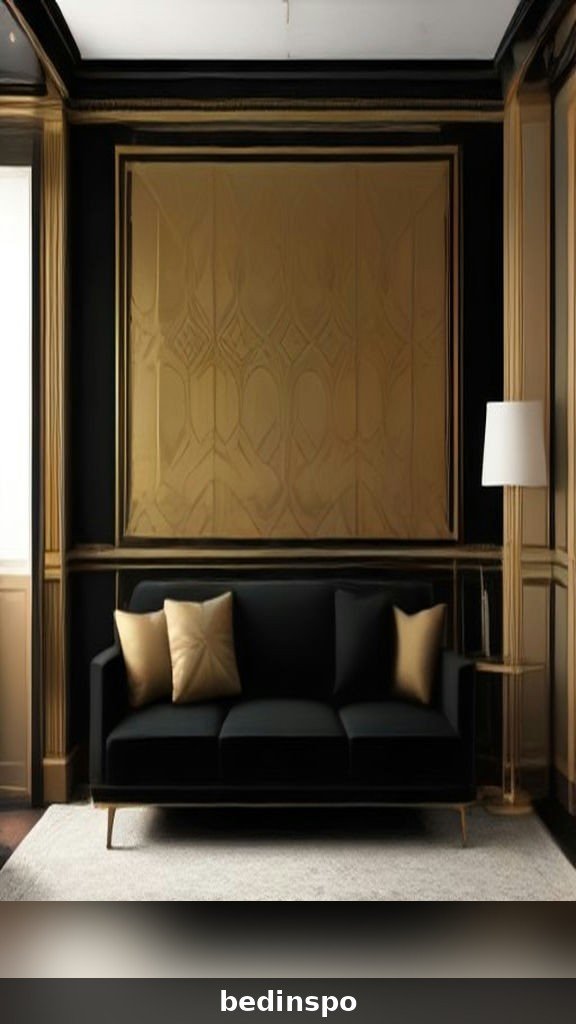
The floor is the largest canvas in your living room, and a geometric rug is the fastest way to lay down deco DNA. Look for bold, symmetrical patterns — overlapping circles, stepped borders, fan motifs, chevrons, Greek key borders — in a palette that ties your room together. A black, ivory, and gold geometric rug under a velvet sofa is practically the neo deco uniform, and it works every single time.
Scale matters more than pattern. In a seating area, the rug should be large enough that at least the front legs of the sofa and chairs sit on it; a too-small rug chops the room into pieces. If your furniture is already patterned or colorful, choose a rug with a quieter geometric — a tone-on-tone trellis or a subtle border pattern. If the room is mostly solid, let the rug be the star with a high-contrast, graphic design. Either way, the geometry does the talking.
7. The Brass and Marble Coffee Table
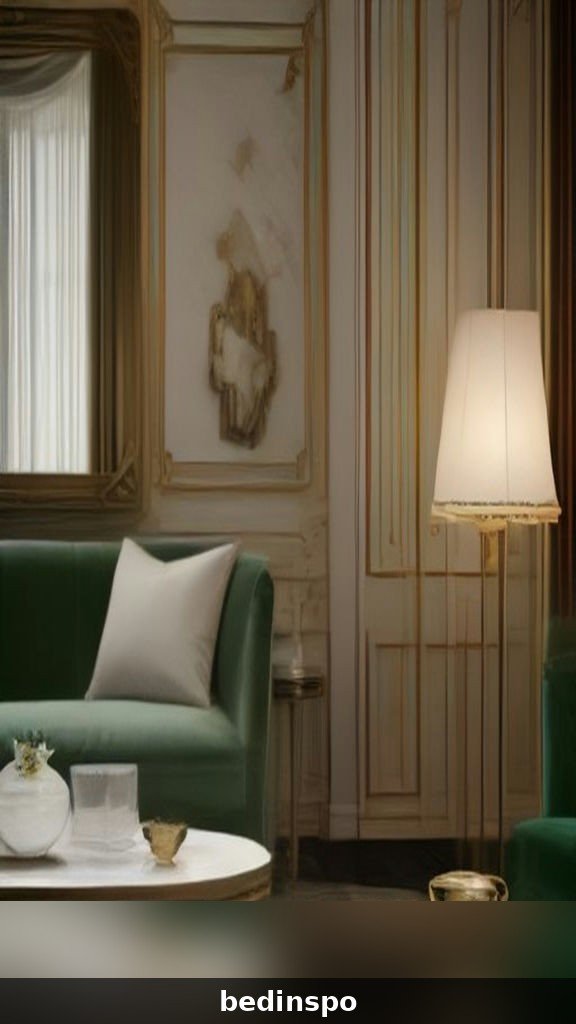
Every glamorous living room needs a coffee table with presence, and nothing says neo deco like brass paired with marble. The combination hits two deco obsessions at once: luxurious natural stone and warm metallic shine. A round marble top on a geometric brass base is the sweet spot — the circle softens the room while the faceted base brings the deco geometry.
Style the tabletop with the same material language: a small brass tray corralling candles, a stack of art books, a sculptural object in stone or metal. Keep it edited — three to five objects, varying heights, with some breathing room. If marble feels too precious for real life (it stains), look for marble-look porcelain or a honed black granite alternative. The brass base is the non-negotiable part; it is what makes the table read as deco rather than just modern.
8. The Art Deco Statement Chandelier
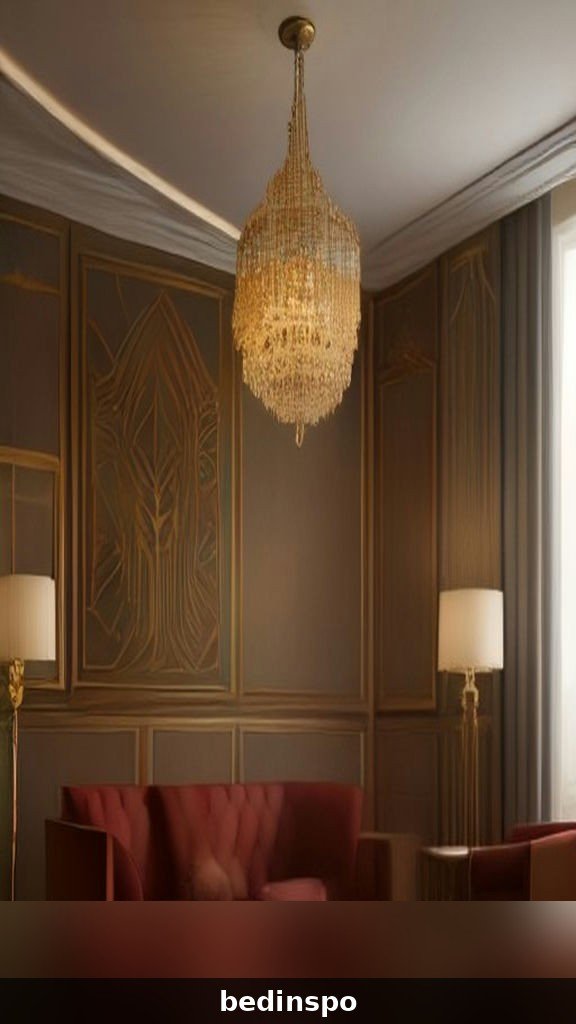
Lighting is where neo deco gets to show off. An art deco-inspired chandelier — tiered, geometric, in brass and glass — turns the ceiling into a design moment and bathes the whole room in warm, flattering light. Look for fixtures with stepped silhouettes, frosted glass shades, fan or sunburst shapes, and globe clusters that echo 1920s skyscraper geometry.
Hang it low enough to feel intentional (the bottom of the fixture should sit about 30 to 36 inches above a coffee table, or at least seven feet off the floor in a walkway) and put it on a dimmer — non-negotiable for any statement light. If a chandelier is not in the cards, a pair of geometric brass sconces flanking a mirror or artwork delivers the same deco glow at a fraction of the cost and commitment. In neo deco, the light fixture is jewelry for the room; choose it like you would a necklace.
9. Fluted Wall Panels
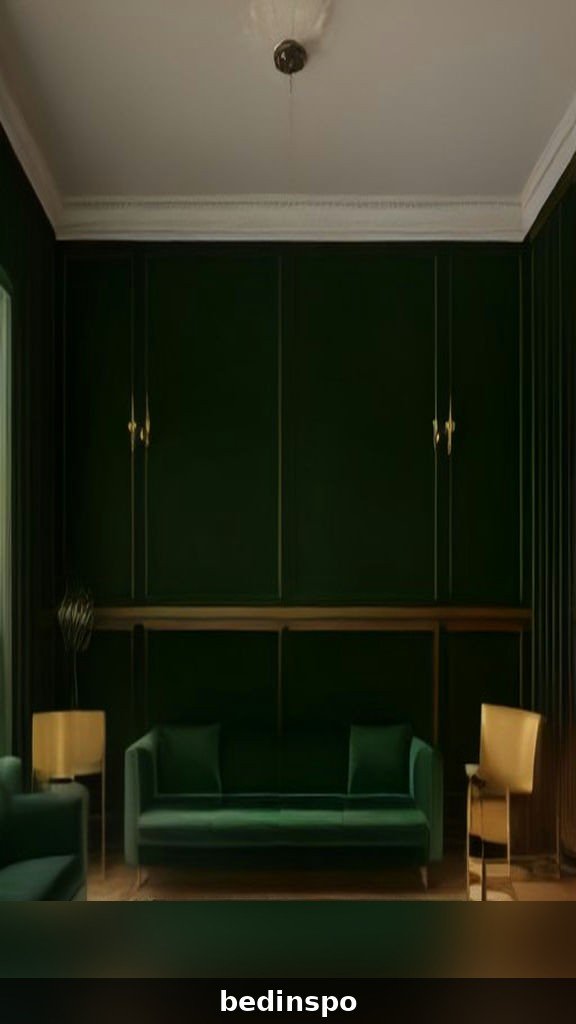
Fluted and reeded surfaces are the texture story of neo deco. Vertical fluting — on wall panels, cabinet fronts, room dividers, even a fireplace surround — adds rhythm and shadow play that flat walls cannot match. It is a direct nod to the ribbed skyscraper facades of the deco era, and it makes even a simple room feel architecturally considered.
You do not need a renovation to get the look. Fluted wood or MDF wall panels are a popular weekend DIY, and they transform a plain TV wall or a dining nook in a day. For a lighter touch, try fluted glass on cabinet doors, a reeded vase collection on a console, or fluted throw pillow covers. Paint fluted panels the same color as the wall for subtle texture, or go bold with black or deep green for full drama. The vertical lines also make ceilings feel taller — a useful trick in standard eight-foot rooms.
10. Bold Jewel-Tone Accent Chairs
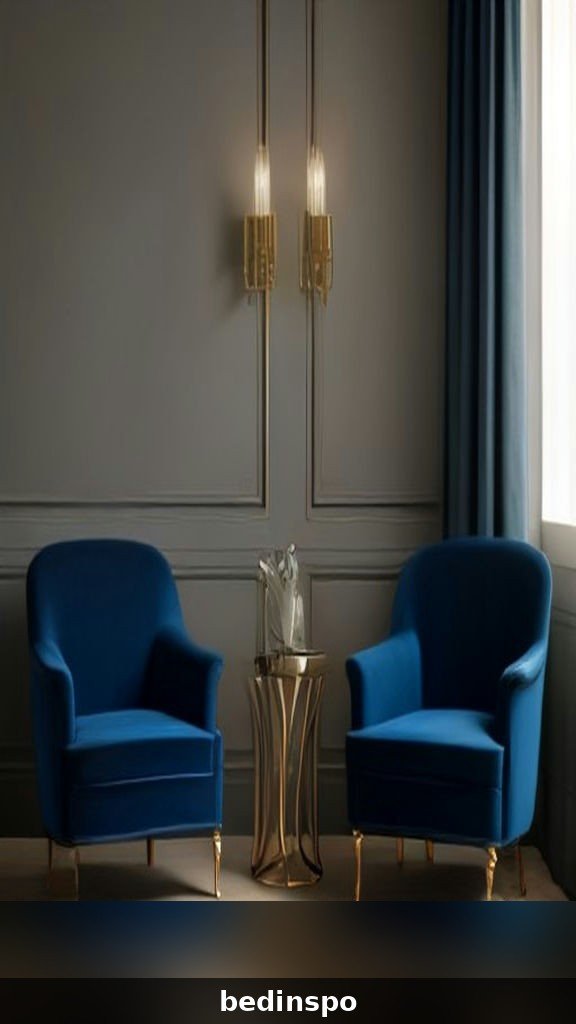
If the emerald sofa is the headliner, jewel-tone accent chairs are the supporting cast that steals scenes. Sapphire blue, ruby red, amethyst purple, topaz gold — a pair of velvet accent chairs in a saturated jewel tone brings the color story full circle and gives the room its most photogenic corner. Barrel or tub chairs in velvet are the ideal shape: curved, compact, and unmistakably deco.
Place them where they can be admired — angled toward the sofa to complete a conversation area, or flanking a window with a small side table between them. Keep the rest of the seating quieter so the jewel tones can sing; if the sofa is already emerald, choose chairs in a complementary jewel like sapphire or amber rather than a competing green. Gold or brass legs tie the chairs back to the room’s metallic story and make even affordable chairs look custom.
11. Fan Motif Textiles and Pillows

The fan — or palmette — is art deco’s most elegant motif, and textiles are the easiest place to use it. Fan-patterned throw pillows, a scalloped-edge throw blanket, or curtains with a subtle fan jacquard bring deco geometry into the soft furnishings, where it feels decorative rather than architectural. It is the difference between a room that references deco and a room that shouts it.
Mix fan motifs with solid velvets and small-scale geometrics for a collected look. A good formula: two solid velvet pillows, one fan-motif pillow, and one small geometric or striped pillow per sofa — in a tight palette of three colors plus metallic. Keep the scale of the fan pattern medium; oversized fans can read as 1980s, while tiny ones disappear. And do not forget the back of the sofa — a fan-motif lumbar pillow is the finishing touch designers always add.
12. The Sculptural Arc Floor Lamp
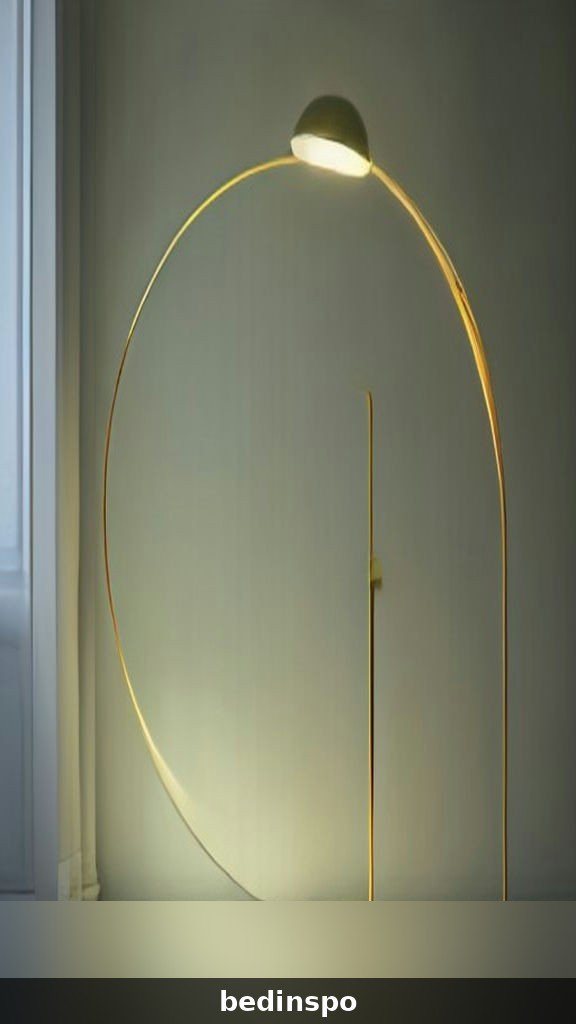
The arc floor lamp is practically the mascot of glamorous modern living rooms, and it fits neo deco like it was designed for it — because in spirit, it was. A sweeping brass arc that curves over the seating area delivers task lighting, sculptural drama, and that unmistakable metallic glow in a single piece. It is the fastest way to add height and movement to a room full of low, horizontal furniture.
Choose an arc with a marble base for stability and authenticity — the heavy base is part of the look — and a shade in brass, black, or frosted glass. Position it so the arc reaches over the coffee table or the end of the sofa, and make sure the cord can run discreetly to the nearest outlet (cord covers painted to match the wall are worth the small effort). If an arc feels too expected, a cluster of three brass globe pendants at staggered heights gives a similar glow with a fresher silhouette.
13. The Glamorous Bar Cart Corner
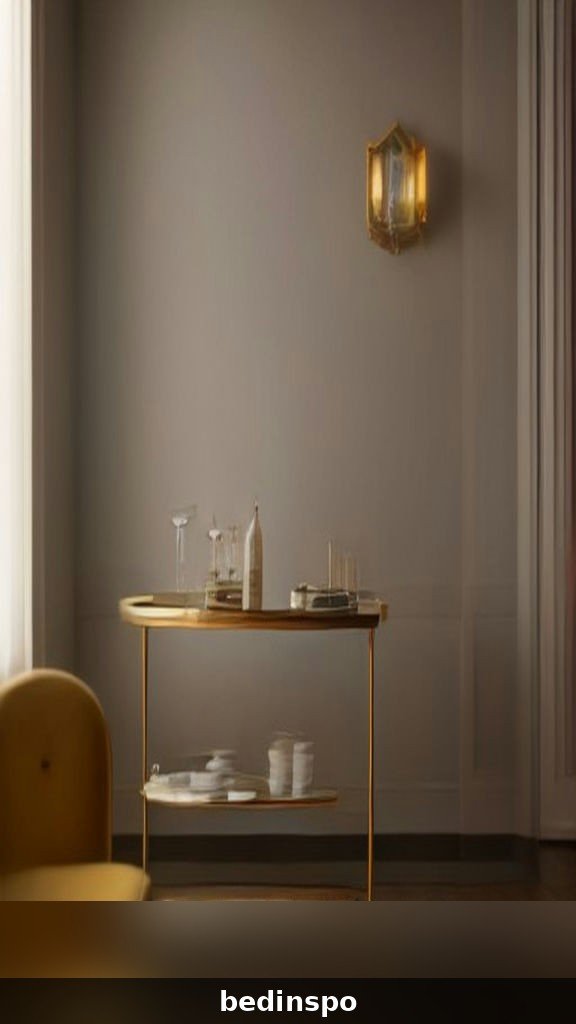
Nothing channels 1920s glamour like a well-styled bar cart, and the neo deco living room is its natural habitat. A brass or mirrored two-tier cart, stocked with beautiful bottles, crystal glassware, and a small ice bucket, turns an empty corner into the room’s most charming vignette. It is part furniture, part party trick — guests always gravitate toward it.
Style it like a still life, not a liquor store. Group bottles by height, add a small tray for glassware, include one fresh element (a citrus bowl, a sprig of eucalyptus, a small orchid), and leave some negative space so it reads as decor. A round mirror or a piece of fan-motif art hung above the cart completes the corner. Even if you rarely drink, the cart works — stock it with sparkling water, fancy sodas, and beautiful glasses, and it becomes a hospitality station instead.
14. Monochrome Black-and-White Deco
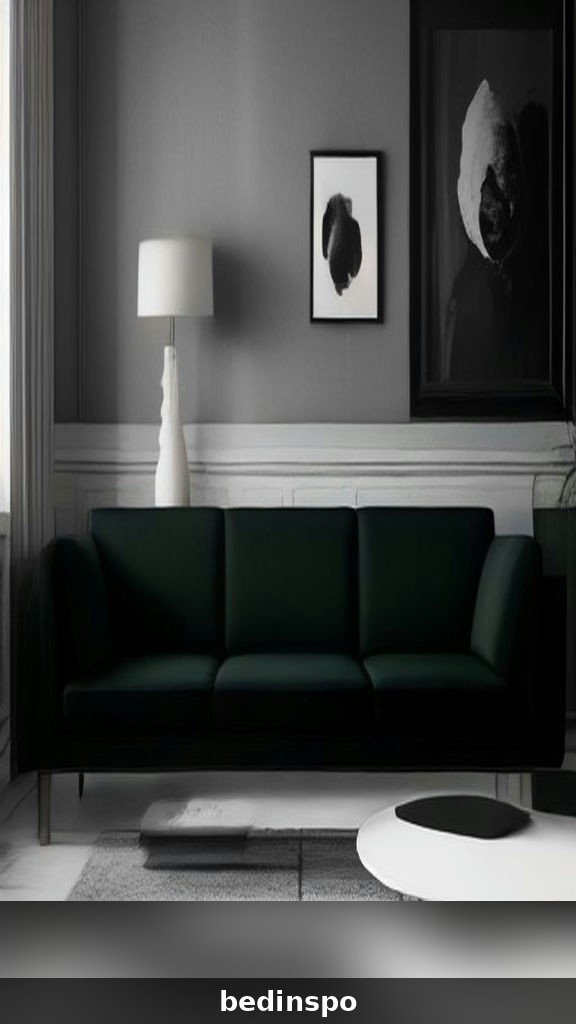
For a cooler, more graphic take on neo deco, strip the palette back to black and white. High-contrast monochrome is deeply deco — think black lacquer, white marble, graphic tile, bold stripes — and it feels incredibly current when paired with modern shapes. A black-and-white deco room is dramatic without a single jewel tone, which makes it perfect for anyone who loves the geometry but not the gold.
The key to keeping monochrome warm is texture and a whisper of metal. Layer black velvet, white boucle, black-and-white patterned pillows, and a high-pile rug so the room feels tactile, then add one metallic — brushed nickel, chrome, or a restrained brass — in lighting and hardware. A single green plant also does wonders in a black-and-white room, adding the one organic note that keeps the geometry from feeling cold. This is neo deco for minimalists.
15. Mixed Metals with Warm Wood
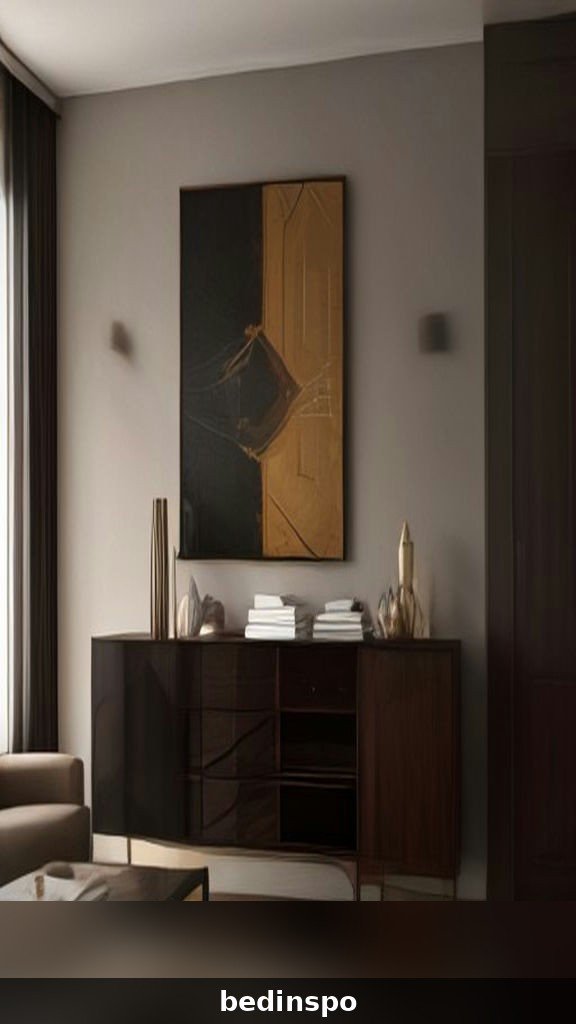
The final idea is the one that makes all the others livable: grounding deco glamour with warm wood and mixed metals. Walnut, smoked oak, or rich mahogany furniture brings an organic warmth that keeps gold and brass from feeling icy, while mixing metals — brass with blackened steel, gold with nickel — keeps the room feeling collected over time rather than bought in a set. This is the difference between a deco-themed room and a deco-inspired home.
Start with one warm wood anchor — a walnut credenza, an oak coffee table, wooden picture frames — and let it soften the metallic moments around it. Then mix your metals with confidence: the old rule about matching every finish is dead. Brass lighting, black hardware, and a nickel mirror can absolutely coexist if each metal appears at least twice in the room. The wood is the peacemaker that lets the metals mingle, and the result is a room with the patina of a well-traveled life.
How to Mix Neo Deco with Modern Minimalism
The secret to neo deco that feels current rather than costume-y is restraint in the mix. Think of it as a ratio: about seventy percent clean, modern foundation and thirty percent deco glamour. The modern foundation — simple-lined sofa, quiet walls, uncluttered surfaces — gives the eye somewhere to rest, while the deco moments — the brass lamp, the velvet chairs, the sunburst mirror — provide the sparkle. When every piece is shouting, nothing gets heard.
Edit ruthlessly as you add. For every glamorous piece that enters the room, consider what can leave or quiet down. A sunburst mirror looks twice as striking on a nearly empty wall as it does in a crowded gallery. Let negative space do its work: deco geometry needs breathing room to read as intentional. And remember that modern minimalism’s best gift to deco is function — every glamorous piece should still earn its keep as seating, storage, or light. Beauty and use, together, is the whole philosophy.
Frequently Asked Questions
What exactly is neo deco style?
Neo deco is the modern revival of 1920s art deco design. It keeps deco’s signature moves — geometric patterns, jewel tones, gold and brass accents, mirrored surfaces, luxurious materials like velvet and marble — but updates them with contemporary silhouettes (especially curves), lighter color palettes, and a more relaxed, livable approach. Think of it as deco’s glamour filtered through modern minimalism’s restraint.
What colors define a neo deco living room?
The classic palette is jewel tones (emerald, sapphire, ruby, amethyst) with black, ivory, and gold — the original deco formula. Modern versions also work beautifully in monochrome black and white with one metal, or in softer palettes of blush, cream, and champagne gold. Pick one dominant jewel tone, one dark anchor (black or charcoal), one light neutral, and one metallic, and build the whole room from those four.
How can I get the neo deco look on a budget?
Start with the highest-impact, lowest-cost moves: a geometric rug, brass spray paint on existing frames and hardware, fan-motif throw pillows, and a thrifted sunburst mirror. Velvet-look pillows and throws deliver the luxe fabric story for very little money. Save your bigger budget for one anchor piece — a velvet accent chair or a brass arc lamp — because a single quality statement piece elevates everything around it.
Does neo deco work in a small living room?
Absolutely — in fact, small rooms are where deco’s tricks shine brightest. Mirrored surfaces and glass visually double the space, a bold geometric rug defines the seating zone, and one dramatic light fixture draws the eye up. Keep the palette slightly lighter (ivory walls, one jewel tone instead of three) and choose leggy, curved furniture that shows floor underneath. Small and glamorous beats big and bland every time.
Conclusion
Neo deco is proof that glamour never really goes out of style — it just waits for the right moment to come back smarter. With its jewel tones, golden geometry, and unapologetic love of beautiful materials, it gives your living room something most modern styles cannot: a sense of occasion. These fifteen ideas are your toolkit, whether you commit to the emerald velvet sofa or simply swap in a sunburst mirror and a few brass touches.
Start with the idea that made you catch your breath — the one you keep picturing in your own room — and build outward from there. Add the curves, layer the metals, let the velvet do its velvet thing. Before long, you will have a living room that feels like the best version of the 1920s: glamorous, confident, and entirely yours. Here is to living rooms with a little more drama — in the very best way.